
Posted October 20, 2026
By Zach Scheidt
Zach’s Second Opinion
Editor’s Note: Hold on! Zach twice in one day?
My dear reader, for reasons still unclear to yours truly, I sent out the wrong Zach article this morning. Of course, it was a peach of a piece, and I was perfectly thrilled to share it with you.
But my friend and colleague has since shown me that I didn’t scroll all the way down to his intended special article. This one’s far more timely, as Zach shares 3 AI opportunities ahead of tomorrow’s earnings reports. Read and consider, my friend. And I’ll see you tomorrow.
I have the honor to remain, quivering in embarrassment, your humble and obedient servant,
Zach’s Second Opinion
Zach here…
I've been taking flying lessons again.
This time I'm working toward my instrument rating. That's the certification that lets a pilot fly through the clouds, relying on the cockpit instruments instead of what you can see out the window.
The goal is simple: I want to be able to fly with Angela, even when the clouds are low.

Lately, on training flights over rural Georgia, I keep noticing the same thing. Big construction sites. Acres of cleared land with long, flat buildings going up far from any town.
I'd bet more than a few of them are data centers. Georgia already has 112 data centers up and running, with 22 more under construction and another 98 planned, according to the U.S. Data Center Map.
Building out AI has been big business. It will stay big business for years.
But up there, I've been thinking about something else. From 3,000 feet, you can see the buildout. What you can't see is what all that computing power is starting to do.
And that's exactly where investors are starting to look.
The Market Is Flying on Instruments
For the past few years, the AI trade has been all about the buildout: chips, networking equipment and memory. The companies selling AI's picks and shovels got paid, and so did their shareholders.
Earlier this month, Bespoke Investment Group's basket of AI infrastructure stocks was up 78.6% for the year. Its basket of AI implementation stocks (companies using AI to change how they do business) was up just 1.5%.
That gap tells you where the money has been. It doesn't tell you where the money is going.
This month, the buildout trade has hit turbulence. Last week brought a sharp selloff in AI infrastructure stocks, and semiconductor stocks recently put together their longest losing streak since October 2008.
Here's the thing about markets. They don't wait for the picture to be clear. Stocks move on what investors expect to happen next.
That's a lot like flying on instruments. When you're in the clouds, you can't see the runway. You trust what your instruments tell you about what's ahead, and you act on it before you ever break out into clear sky.
Right now, investors are moving capital in anticipation of AI's next phase: implementation.
They're looking for companies that will use AI to drive real growth in real industries. And one of the most exciting places where this is happening is medicine.
How AI Is Speeding Up New Medicines
Most diseases are driven by a specific protein in the body. Scientists call it the "target." A drug works by latching onto that protein, like a key fitting into a lock.
Finding the right key has always been the hard part. Traditionally, researchers screened huge libraries of compounds, often for years, hoping something would fit.
AI flips that around. Instead of trying millions of keys, AI can study the shape of the lock and design a key to fit it.
Here's a recent example. Drugmaker GSK let an AI company called Chai Discovery design molecules for a list of disease targets. Chai's AI had no special training on GSK's proteins. GSK then tested the designs in its own lab.
For every target GSK tested, at least one AI-designed molecule latched on. GSK was impressed enough to turn the trial run into a full partnership.
More than 170 AI-discovered drug candidates are now being tested in human trials, and AI is cutting the time it takes to start a study by 15% to 20%, according to Axis Intelligence.
One standout: Insilico Medicine used AI to take a drug for a serious lung disease from discovery to mid-stage human trials in under 30 months. That process usually takes six to eight years. The drug moved into late-stage trials this year.
One point of clarification: No AI-discovered drug has won full FDA approval yet. But the pipeline is getting faster and fuller.
And the FDA itself is getting on board. The agency rolled out its own AI tool, called Elsa, to all staff last year and launched an upgraded version in May. FDA Commissioner Marty Makary has said one reviewer task that used to take two to three days now takes six minutes.
The FDA is also cutting back on animal testing requirements, and this year it qualified the first AI-based drug development tool for regulatory use.
It's early, and the FDA's claims about speed haven't been independently proven. But the direction is clear. More shots on goal, and a faster path from the lab to the patient.
Three Healthcare Giants Putting AI to Work
Rather than bet on which small biotech wins the race, I'm watching three large companies that are putting AI to work right now. All three report earnings Wednesday morning, October 21.
Thermo Fisher (TMO): Faster Clinical Trials
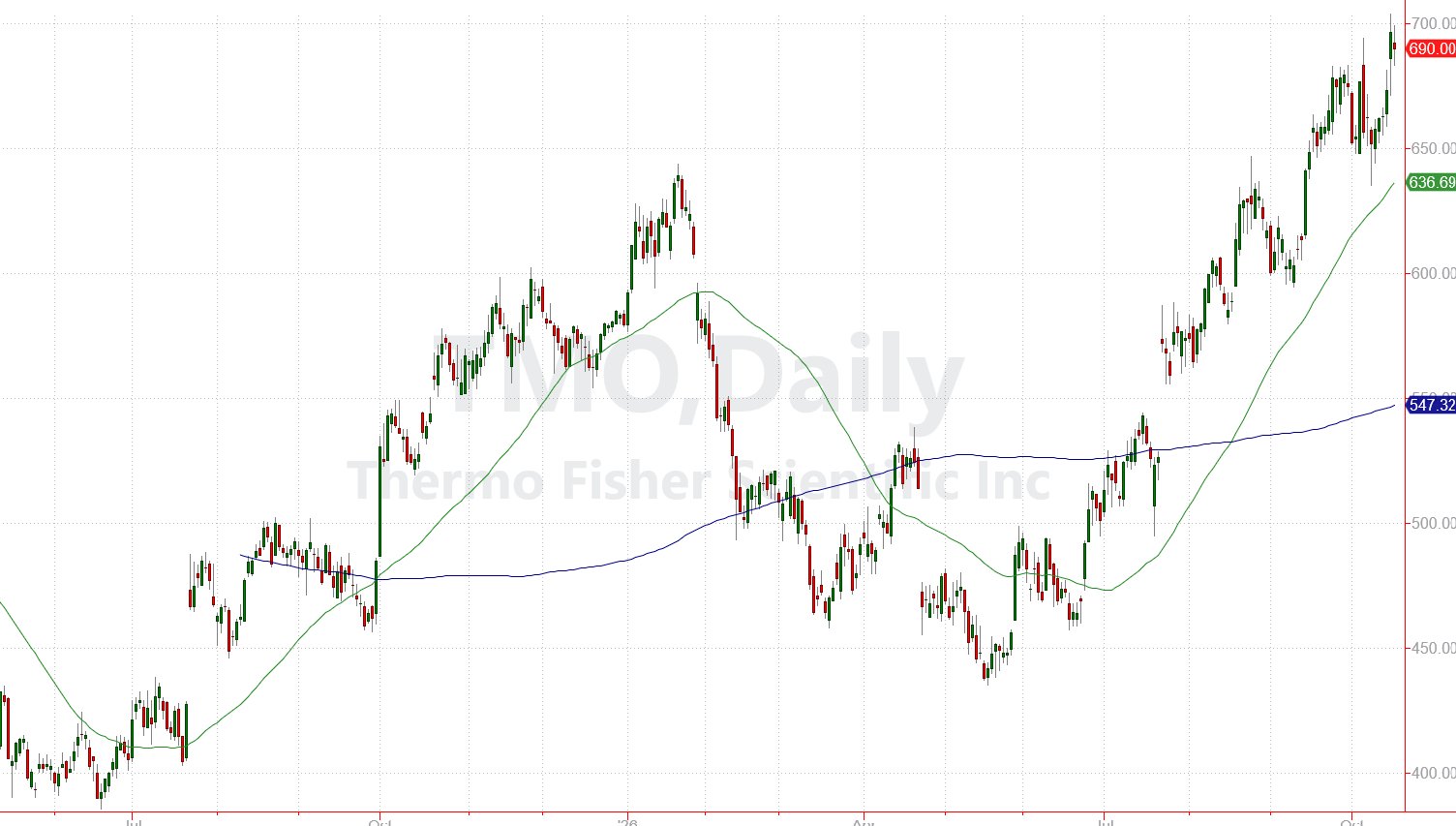
Thermo Fisher supplies drug companies at nearly every step, from research to manufacturing. I'm most interested in clinical trials, the longest and most expensive stage of bringing a drug to market.
Last year, Thermo Fisher teamed up with OpenAI to bring AI into PPD, its clinical research business. The goal is to shorten clinical trials and flag drugs that are likely to fail earlier, so drug companies can put their money where it counts.
Thermo Fisher also bought Clario for $8.875 billion. Clario collects and analyzes the data that clinical trials are judged on. According to Thermo Fisher, Clario's technology supported about 70% of new drug approvals in the U.S. and Europe over the past decade.
Analysts expect earnings of about $6.40 per share on $11.93 billion in revenue. I'll be listening for new clinical research business and any real results from the OpenAI work.
Danaher (DHR): The Self-Driving Lab
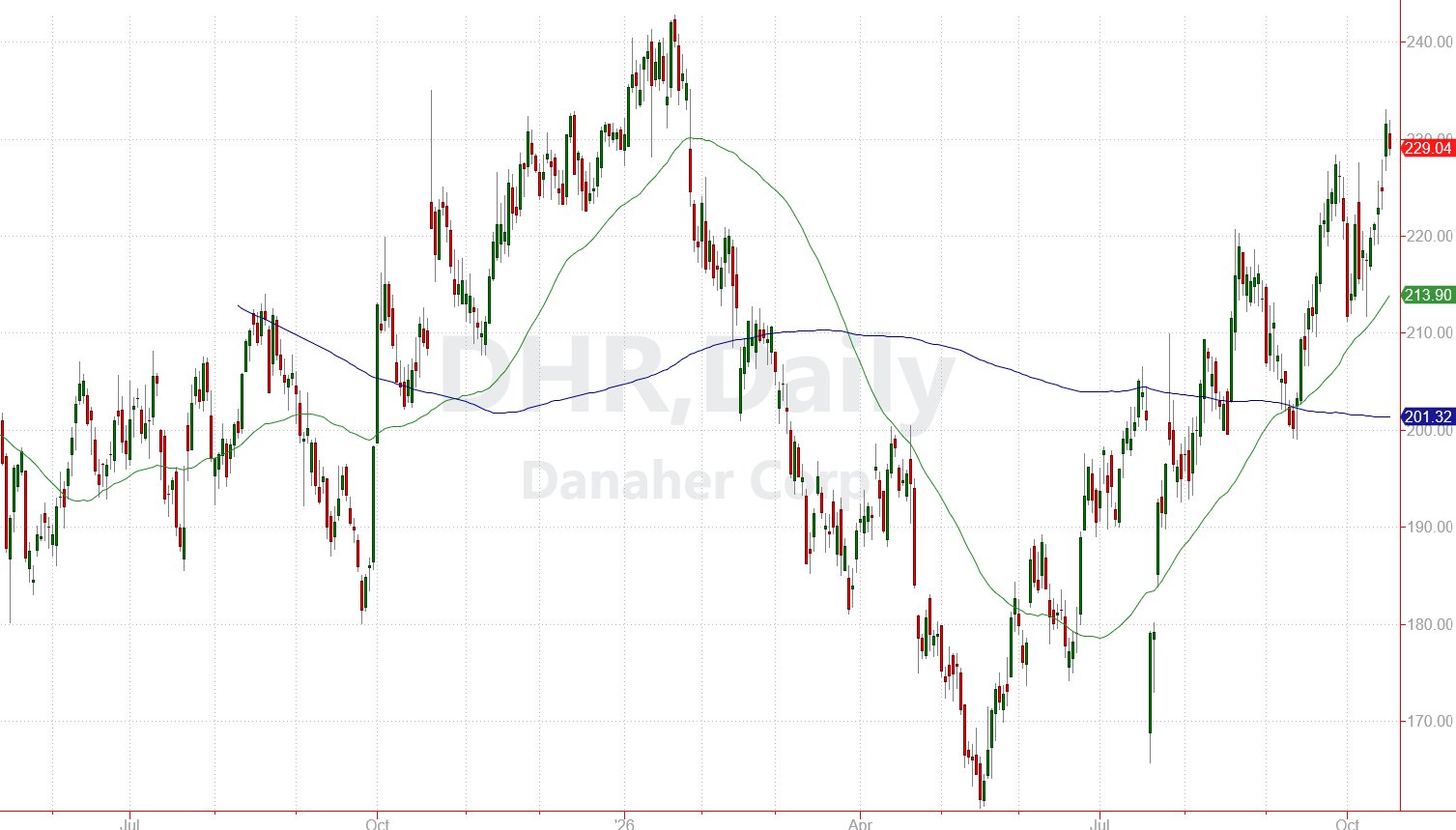
Danaher makes the equipment scientists use to discover and manufacture drugs. Its Cytiva business supplies much of what's needed to produce biologic drugs at scale.
Earlier this month, Danaher announced it is building an AI-powered "autonomous lab," where robots and AI work together to develop antibodies and other research tools. It's expected to run at scale in early 2027, and Danaher is targeting up to eight times faster discovery.
A week later, it announced a collaboration with NVIDIA to bring more AI computing power into the lab.
Those are goals, not results yet. But Danaher is clearly serious about this.
Analysts expect earnings of about $1.92 per share on $6.56 billion in revenue. I'll be listening for demand from drug manufacturers and more detail on the autonomous lab.
Abbott (ABT): AI Reaching Patients Directly
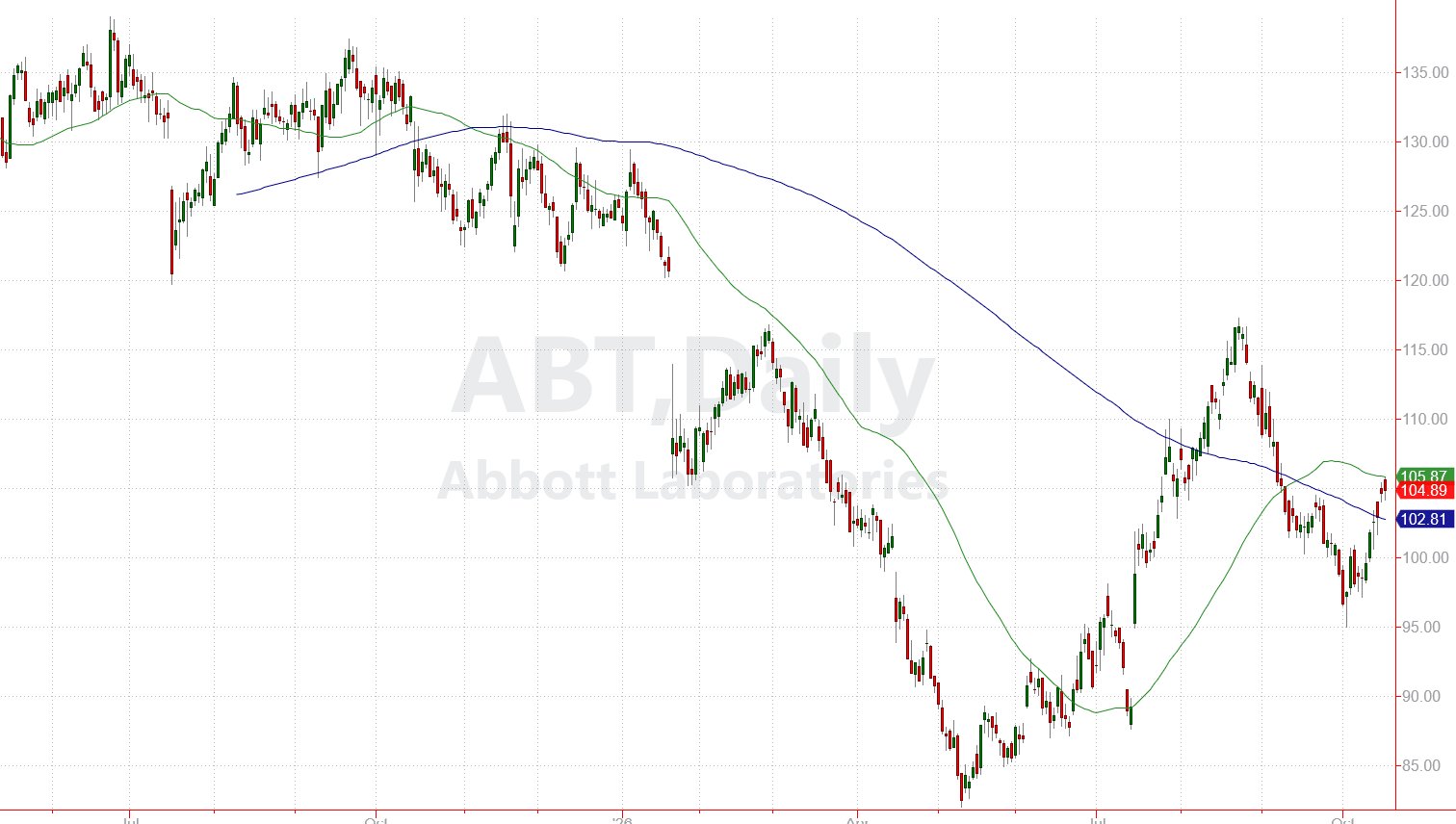
Abbott gives us a different angle. It's putting AI directly in patients' hands.
Its FreeStyle Libre is a small sensor that tracks blood sugar around the clock. In January, Abbott added an AI feature called Libre Assist. You snap a photo of your meal, and it predicts how that meal will affect your blood sugar before you take a bite.
Abbott also closed its acquisition of Exact Sciences in March, adding the Cologuard cancer screening test and other cancer diagnostics. Exact is expected to bring in about $3.2 billion in sales this year, and Abbott sees cancer screening and precision cancer diagnostics as a $60 billion market.
Analysts expect earnings of about $1.41 to $1.43 per share on roughly $13 billion in revenue. I'll be watching how much Exact contributes and how fast Libre is growing.
What I'm Doing Next
I don't own any of these three stocks today. But I'm watching them closely.
These are the kinds of established companies I could use in my Income Alliance portfolio, and what management says Wednesday could help shape that decision.
There's a second opportunity here, too. Big drug companies are already paying up for AI. AstraZeneca just agreed to pay AI drug developer insitro up to about $1.5 billion. That's good news for smaller biotech companies built around this technology.
If Wednesday's reports confirm the trend, we may soon be taking aggressive positions in some of those smaller names in James Altucher's True Alpha.
I'll be listening to all three calls Wednesday morning, and I'll keep you posted on what I hear.
In the meantime, think about how this technology is affecting your life… Has AI shown up in your own health care yet? A doctor's visit, a test, an app on your phone? I’d love to hear about it at feedback@rudeawakening.info.
The next time I'm up in the clouds working on that instrument rating, I'll be thinking about this trade.
You don't need to see the runway to know where you're headed. You just need to trust your instruments. Right now, mine are pointing toward AI in medicine.

A COLA, But No Smile
Posted October 20, 2026
By Zach Scheidt

Give Me Liberty or Give Me Beige!
Posted October 19, 2026
By Matt Badiali

The Wright Stuff
Posted October 16, 2026
By Sean Ring

Crude and Unusual Profits
Posted October 15, 2026
By Dan Amoss

The Half-Life of a Bargain
Posted October 14, 2026
By Matt Badiali