Posted January 29, 2026

By Byron King
Trump’s Victory at Sea
“Under my budget, we will be expanding the U.S. Navy,” said President Trump last fall to an auditorium filled with generals, admirals, and senior noncommissioned officers.
“Because we basically don’t build ships anymore,” he added. “We do build submarines, but we don’t build ships,” he clarified. “During the Second World War, we were doing about a ship a day, but now we don’t do ships.”
That’s about to change. Because with Trump in charge, America will again “do ships.” At least that’s the promise, which loops back to one of the man’s signature issues, “shipbuilding-shipbuilding-shipbuilding.”
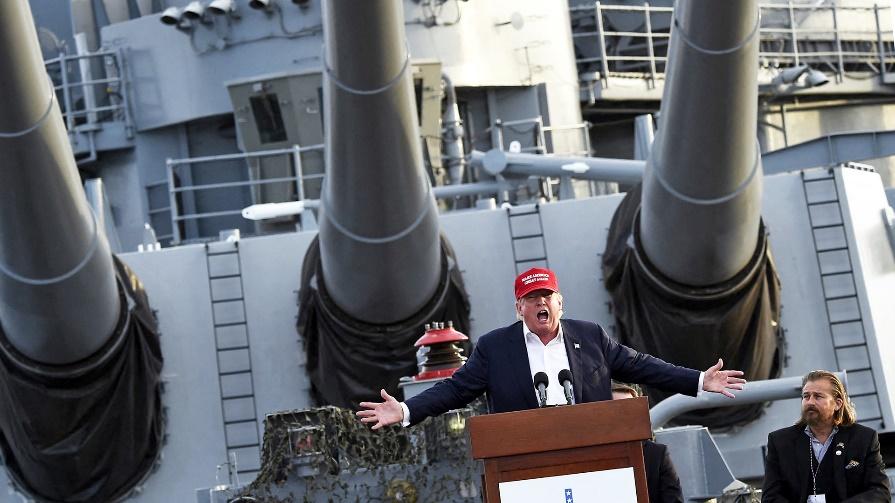 Trump campaigns in 2024 aboard Battleship ex-USS Wisconsin (BB-64). Courtesy TWZ.com.
Indeed, with a White House-level focus on ships and shipbuilding, we stand at the intersection of geopolitics and national industrial strategy, which offers immense new opportunities for American businesses and investors. Let’s dive in…
“Start Thinking About Battleships!”
During his address to the brass last fall, at one point, Trump cut loose with this zinger: “I think we should maybe start thinking about battleships.”
Even as an outside observer watching the live feed, one could hear gasps in the room and almost feel the change in air pressure as hundreds of senior players inhaled at once. As in… Huh? What the heck? Where is Trump going with this?
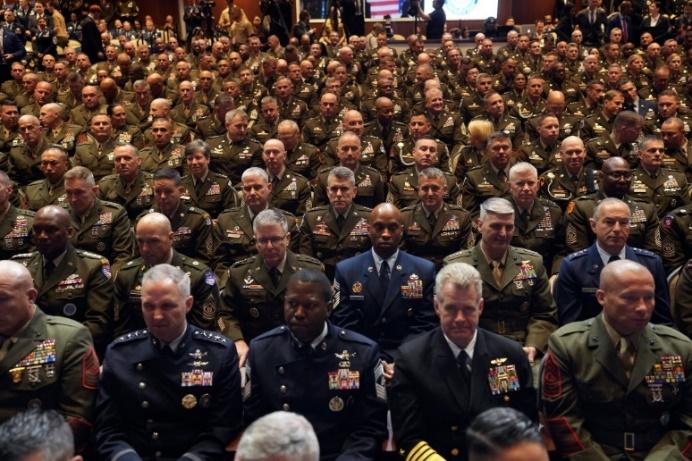 Attentively, the assembled brass listens to their Commander-in-Chief. Courtesy ChicagoTribune.com
In his inimitable manner, Trump wasted no time before explaining his comment. “I used to watch Victory at Sea,” he said, referring to the classic documentary series about the U.S. Navy during World War II. It first aired on NBC in 1952-53, when Trump was a young boy. (Note: it’s available on YouTube if you’re interested).
 Victory at Sea title screen. Courtesy NBC.
“I loved Victory at Sea,” said Trump. “The old black and white footage… and those big ships came with the destroyers alongside of them, and nothing was going to stop ‘em.”
Trump continued, referring to backroom White House policy discussions: “We actually talk about them (battleships), you know? … Some people would say that’s old technology… But I don’t think it’s old technology… Thick sides of solid steel, unlike today with aluminum, which melts when it even looks at a missile coming in.”
Then this: “Those ships,” said the American president, kind of sighing and with a distinct, wistful tone to his voice, “they don’t make them like that anymore.”
Damn right! Trump has framed the issue. But… and to channel my inner admiral… where are we going with this?
What’s In a Battleship?
If you don’t know what Trump means when he discusses the old, armored queens of the ocean, you could do worse than visit one of several battleship museums scattered across the country: Fall River, Camden, Norfolk, Wilmington, Mobile, Galveston, Los Angeles, and Honolulu. And apologies for not having space to mention other locales that host ex-Navy museum ships of lower tonnage and gunnery than the purely battleship sites.
As an aside, and for the benefit of new subscribers, I’m an old Navy guy with not quite 31 years of active and reserve service. Mostly, I served on the aviation side, on aircraft carriers versus the smaller ships of the so-called “surface Navy.” But along the way, I learned plenty about big gray hulls and their big, powerful guns. (Note: As a retired senior officer, I’m required by law to say that my views herein are personal opinions, and I do NOT speak on behalf of the U.S. Navy, Department of War, or U.S. government.)
So, back to Trump and his views on battleships, which certainly raise questions: What’s inside a battleship? What’s special about them? Why don’t “they” – the Navy and U.S. industry – “make them like that anymore,” as Trump lamented? And are these kinds of big ships really obsolete?
The quick answer – I could discuss this all day – is that, figuratively and literally, a “battleship” represents the pinnacle of a nation’s technology and industrial prowess. And Trump is on target when he heaps praise upon the castles of steel that helped the U.S. prevail in WWII.
Consider, for example, ex-USS New Jersey (BB-62), now a museum vessel berthed at Camden, just across the river from Philadelphia. I’ve visited this ship several times, including during a drydock repair evolution in the spring of 2024.
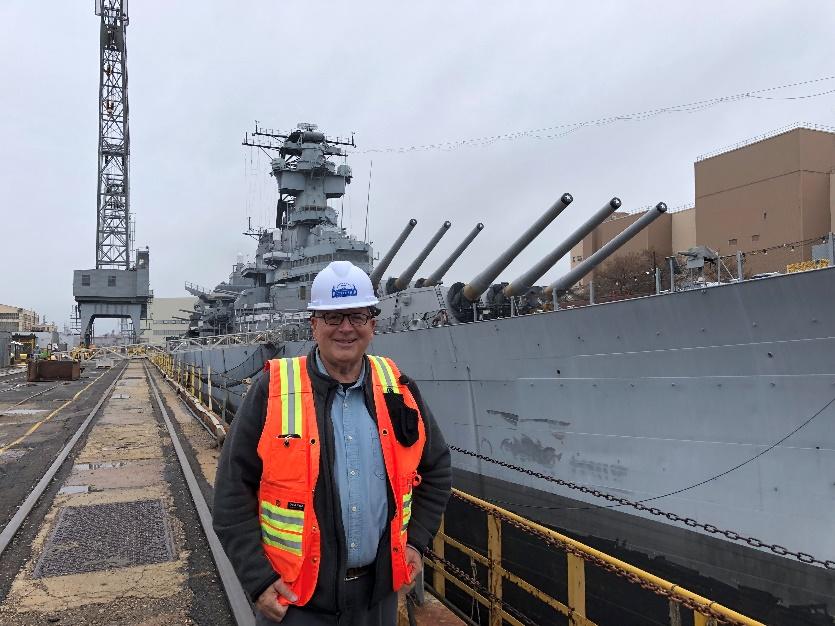 Your editor at Drydock #3, Philadelphia Ship Repair company, with Battleship New Jersey in the rear.
From bow to stern, and every inch in between (887 feet, 7 inches, per spec), this World War II era vessel was, in its time, one of the most complex machines ever built. Indeed, the ship and her gray sisters were triumphs of American engineering and industry. It’s no stretch to say that, then and now, the ideas, attitudes, and design philosophies that went into building New Jersey and others like her truly are timeless.
 Four Iowa-Class battleships, 1946. Courtesy U.S. Navy.
That is, in the late 1930s and as WWII loomed, history required that America accomplish great tasks, namely, prepare to fight and win a global war. Of course, nobody knew the details in advance, but there was a prevailing sense that “something big” was going to happen.
The Navy’s mission was to build the best possible fighting machines to wage that war at sea. This required the Sea Service to focus every effort on what was possible within the realms of science and technology. Thus did the nation, and its Navy, put superb people and immense resources into the project. No skimping, no chiseling.
The Navy engaged the best ship designers and architects of the time. It employed the best engineers and the best trades-and-crafts people, such as metal cutters, welders, machinists, electricians, pipefitters, and countless others. Indeed, ships like New Jersey reflect utmost human and material qualities at every level, from guns in the turrets, to welds of the hull, to those massive rudders and manganese-bronze propellers down below the waterline.
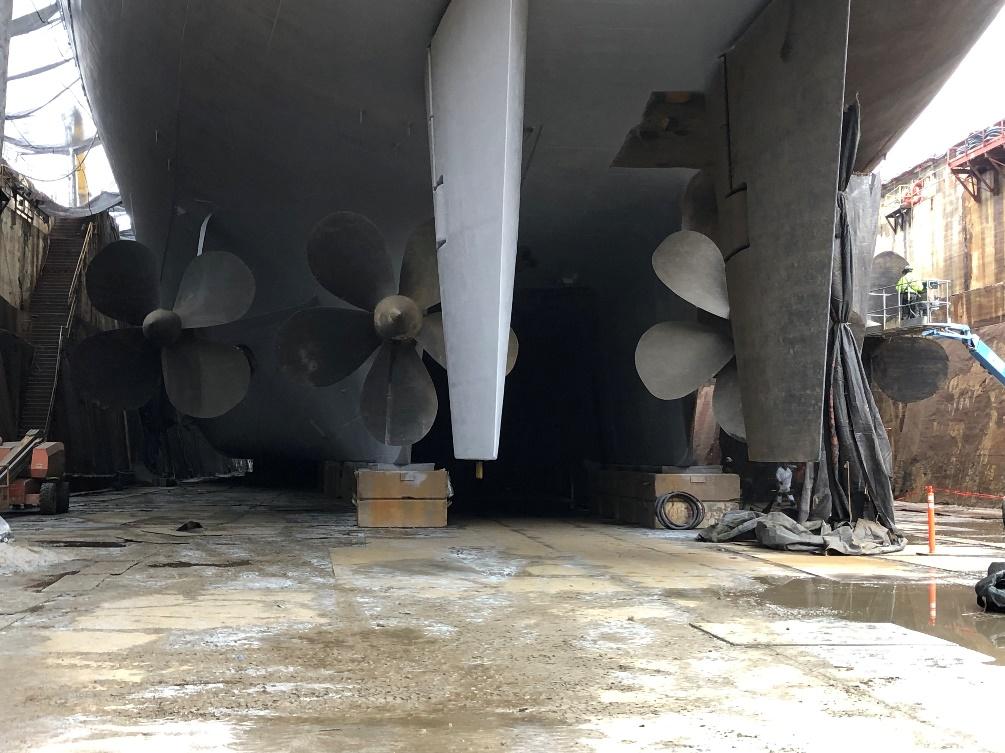 Massive rudders (each the size of a house) and propellers of Battleship New Jersey. BWK photo.
Only the best materials went into a battleship: the best steel, to include the armor, aka “jewelry steel” per metallurgists of the day; the best electrical equipment; the best piping and steam systems; the best gears and engines; the best guns; the best of everything, and you-can-just-keep-on-naming-it. Because… Only. The. Best.
Behind it all – behind New Jersey and other battleships – was a deep, creative, and decades-long American industrial legacy. It included everything from casting metal to developing gun propellants and polishing the finest lenses that went into the aiming optics.
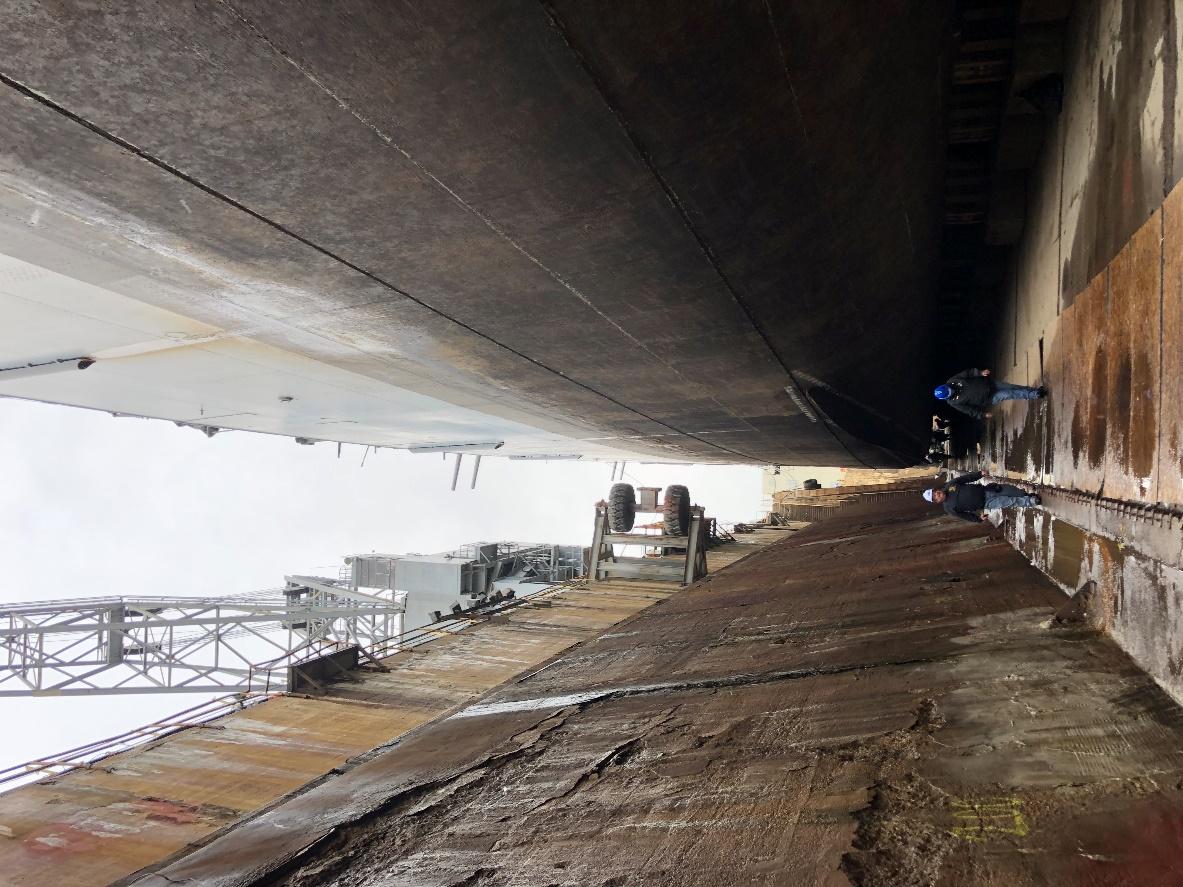 Looking up through the Grand Canyon of Battleship New Jersey in drydock. BWK photo.
There’s fascinating history behind the battleship story, but the short version is that the sleek hull of New Jersey (above), which, in December 1942, gracefully slid down the launch-way and cut water, was the culmination of a long march of U.S. technology. The roots dated back over half a century, to the 1880s, if not before, into the 1860s; again, a long story.
Meanwhile, consider the broader national industrial focus during WWII and the scale and scope of effort behind just this one program (i.e., the Iowa-class battleships, among many otherarms programs). Beginning in 1939 and continuing until the end of the conflict in 1945, the U.S. built six of these gigantic vessels, USS Iowa, New Jersey, Wisconsin, and Missouri, plus two other unfinished ships that were never commissioned, USS Illinois and Kentucky.
All of this occurred fast and furiously in the late 1930s and early 1940s, in a country with a population of about 140 million, within a broken economy emerging from the Great Depression and reluctantly marching toward war.
Now, with this in mind, consider the context when President Trump says he wants to build new battleships. And please… c’mon, man… don’t take him literally because no, he’s not saying that he wants more Iowas or New Jerseys.
When Trump says he wants “battleships,” he’s basically saying that he wants more and better Navy ships; and at the same time, he’s saying that he wants more of that “shipbuilding-shipbuilding-shipbuilding” thing.
In other words, Trump wants to set in motion a long-term, national-scale, economy-moving, naval and maritime industrial redevelopment program, focused on advanced technology and jobs-jobs-jobs that go with such a massive effort.
At an even higher level, Trump raises other critical issues the nation ought to ponder collectively. Such as…
Whether or not the U.S., as a political and cultural entity, can do anything even remotely similar today, compared with 1939 – 45. That is, when one surveys the American landscape from sea to shining sea, it’s worth asking what’s missing today versus, say, 85 years ago? What has changed so profoundly? What has America gained or lost over the past three or four generations?
Okay, enough philosophy; let’s refocus on the question of whether or not battleships are worth the investment. Because hey… Aren’t they supposed to be obsolete?
Are Battleships Obsolete?
To some people, the word itself – “battleship” – evokes images of the early 20th century; that is, of President Theodore Roosevelt showing off America’s new industrial and national power by sending his Great White Fleet on a voyage around the world between 1907 and 1909.
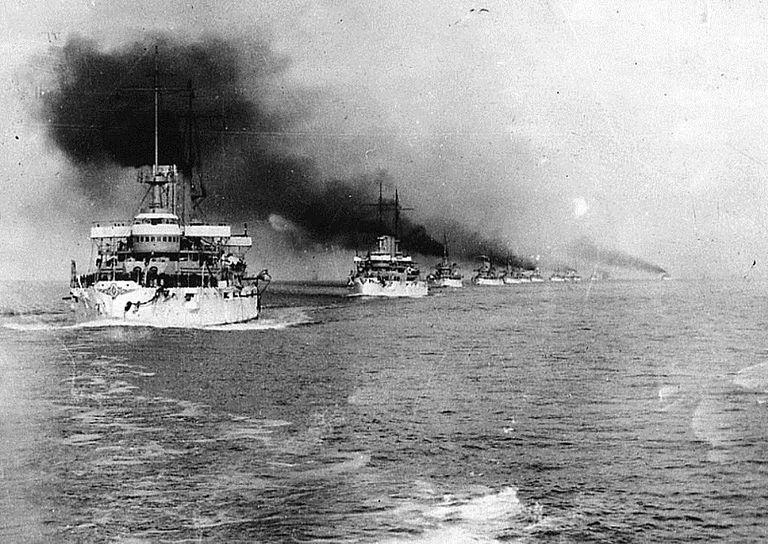 Great White Fleet, 1907. Courtesy National Archives.
Further along the timeline, the idea of battleships resurrects political and diplomatic history from the 1920s, and so-called “Battleship Treaties.” These were intended to reduce naval expenditures and limit the tonnages of the British, U.S., and Japanese navies in the post-Great War (aka World War I) period. Some politicians actually thought they could keep the technology of war in a bag.
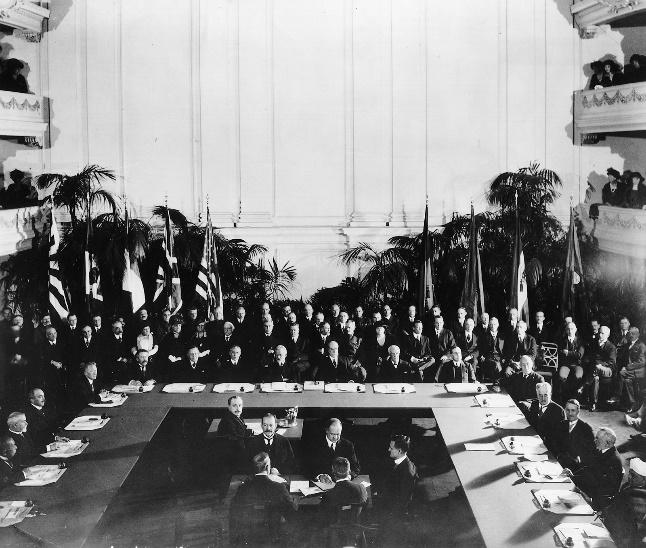 Washington Naval Conference of 1922. Courtesy National Archives.
Then there are the iconic images of Pearl Harbor on December 7, 1941, when bombers from the Imperial Japanese Navy attacked and left much of the U.S. battleship fleet burning and sinking.
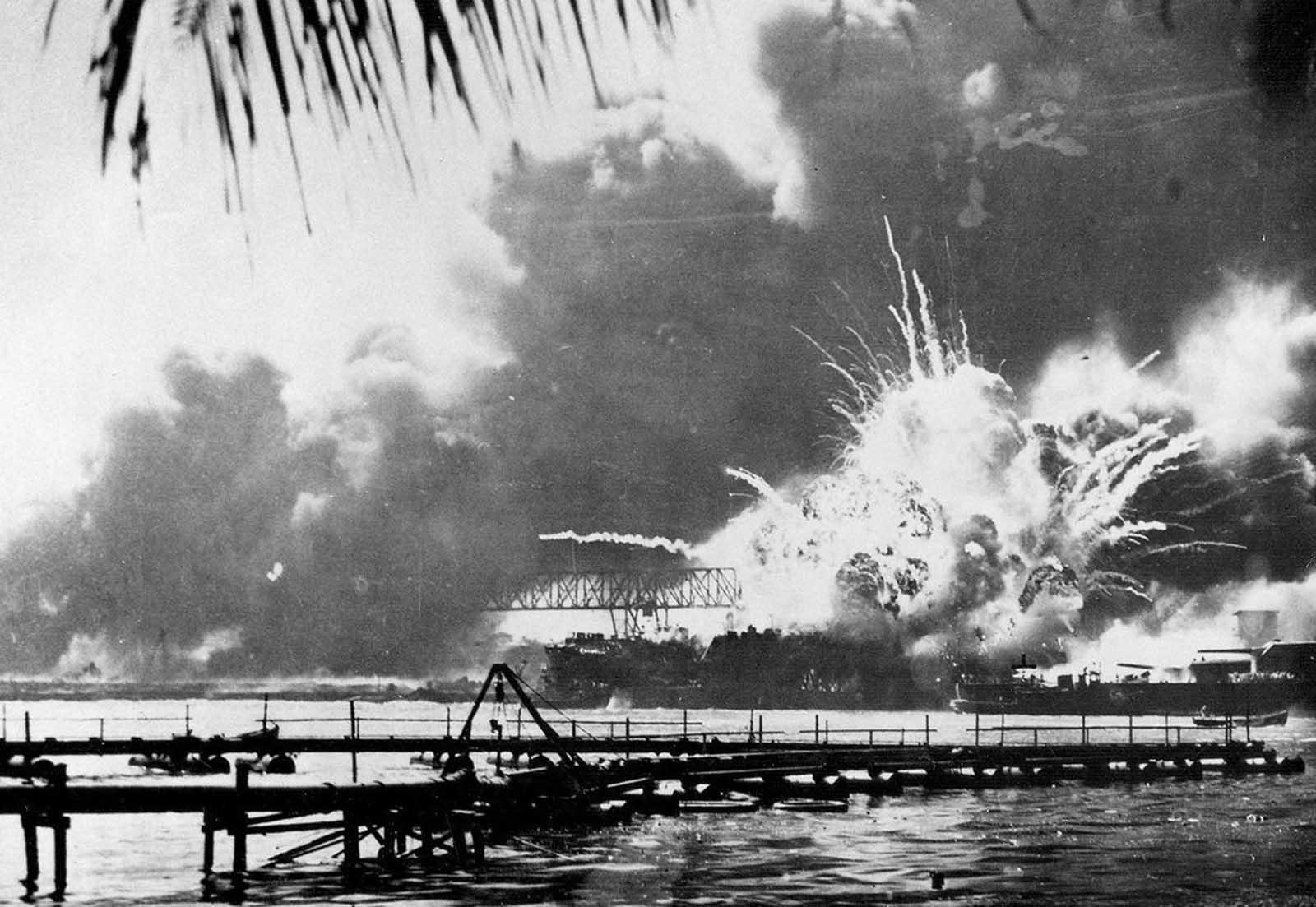 USS Arizona (BB-39) explodes after being hit at Pearl Harbor. Courtesy National Archives.
But there’s an upside to battleships, too. Definitely, they were instrumental in shaping the outcome of WWII. And consider the surrender ceremony of the Empire of Japan, held around a dining room table brought up from below decks on ex-USS Missouri (BB-63) on September 2, 1945.
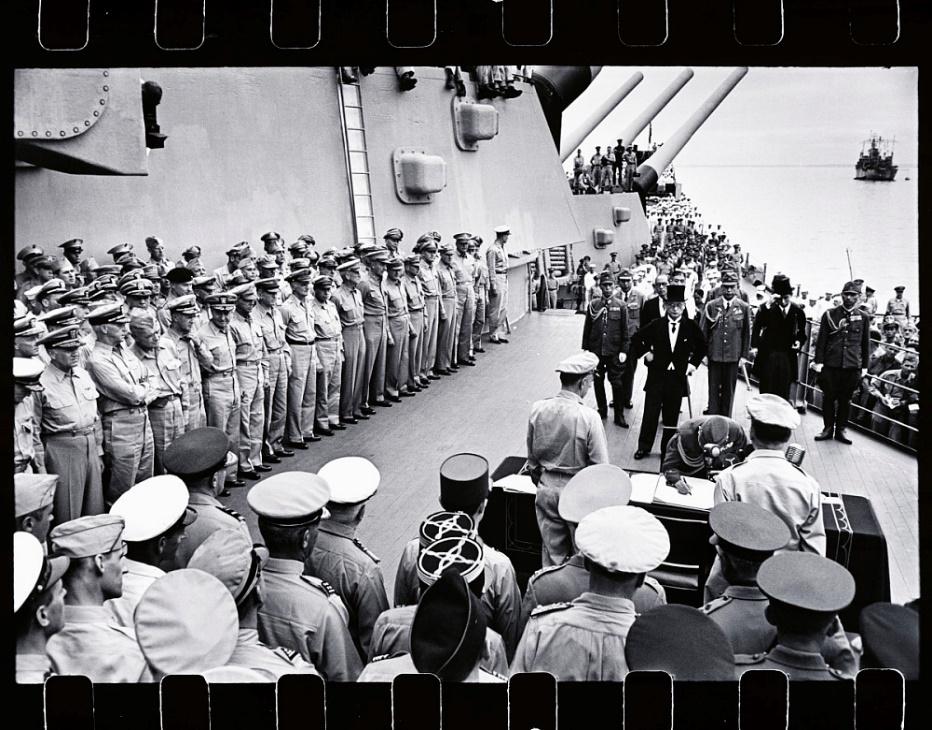 Representatives of Japan surrender aboard Battleship USS Missouri (BB-63). Courtey National Archives.
This is all interesting history, right? But what about the immediate question, which is whether or not battleships are obsolete? Well, that issue requires more scrutiny.
Are battleships obsolete because they aren’t fast and maneuverable? Not at all, just look at the image above, of the rudders and propellers on ex-USS New Jersey. That is to say, a WWII-era Iowa-class battleship was as fast as (or faster than) any modern naval warship.
Are battleships obsolete because they lack protection against attack? Nope, and indeed, with significant size and buoyancy, watertight construction, super-strong armor belts, deep damage control systems, and a host of other related design features, an Iowa-class battleship is among the most survivable naval fighting ships ever constructed.
Are battleships obsolete because they were – back then – built to haul big guns, whose range is about 20 or so miles on the best of days? And now, blowing stuff up is all about airplanes and missiles, right? Aha, now we’re getting closer to the issue.
Sure, aircraft from carriers can haul ordnance many hundreds of miles, versus firing shells from even the biggest guns. But that’s not what we’re talking about at this point in the “battleship” evolution. Because a modern battleship would, undoubtedly, carry long-range attack weapons such as cruise missiles and more. Meanwhile, it’s not as if the sky is wide open to carrier-based aircraft anymore; just consider the advanced air defense systems many other nations possess.
Frankly, the best explanation I ever heard for why the Navy stopped building big vessels like battleships came from Admiral Tom Hayward, who was, at the time, serving as Chief of Naval Operations (CNO). He said, “We stopped building battleships because they are expensive to construct and maintain, and the American people didn’t want to pay for them.”
Meanwhile, some or all of those allegedly “obsolete” WWII battleships were reactivated for use during the Korean War, Vietnam, the Cold War, and into the 1990s with Desert Storm. And no combatant commander, anywhere and in any hot conflict, has ever failed to use the firepower
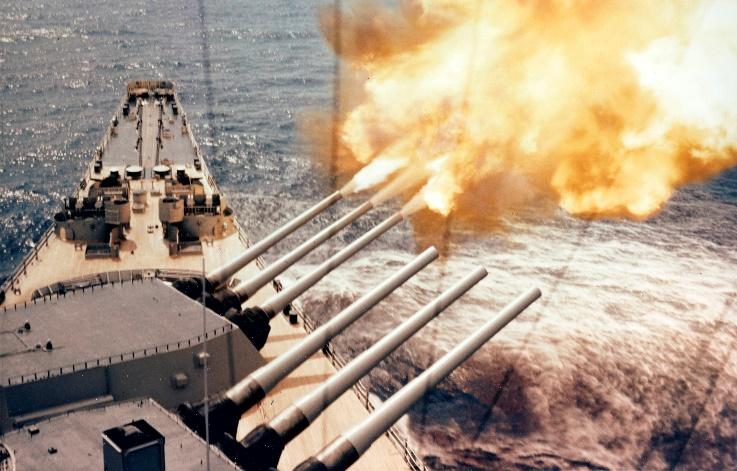 Battleship Wisconsin unloads 3-gun salvo. U.S. Navy image.
What Does Trump Want?
There’s more to all of this, but let’s return to Trump and his call to bring back what he refers to as “battleships.” In all likelihood, these new vessels won’t qualify as classical battleships; they’ll be more like, say, heavy cruisers, or perhaps battlecruisers. It depends on the size and displacement, and indeed, the nomenclature gets technical amongst navalists.
From the looks of things and early renderings, Trump wants a relatively large ship, though not quite the size or displacement of the aforementioned New Jersey and her sisters.
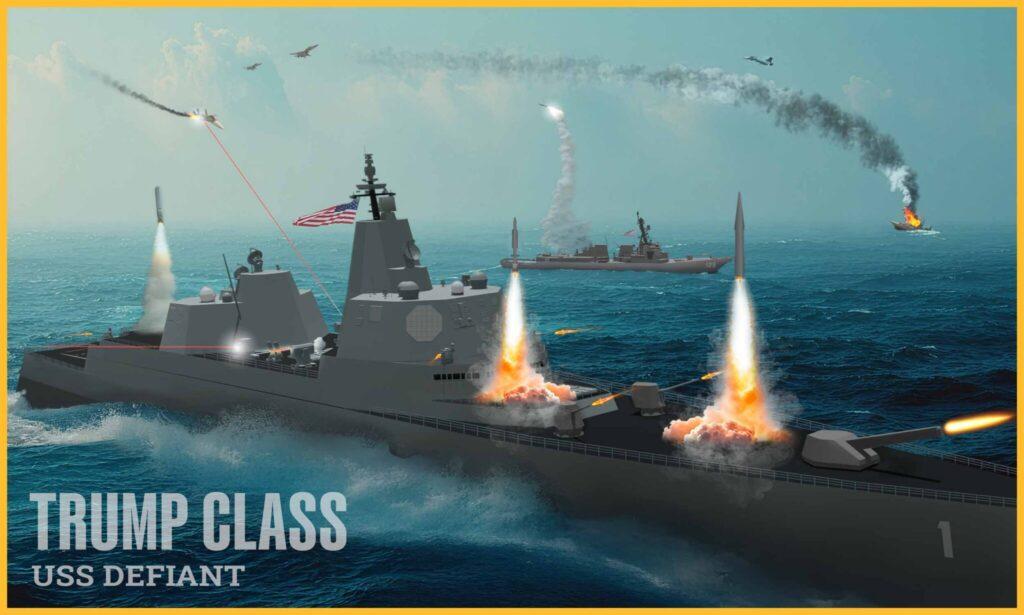 Artist rendering of the so-called “Trump-class” vessel. Dept. of War image.
The Trump-class vessels will be big, relative to what’s out there now, and with armor in appropriate places. They’ll have extensive watertight features and significant buoyancy. They’ll have massive electrical power for phased array radars and electronic weapons, as well as lasers and perhaps electromagnetic rail guns. And plenty of traditional, boom-boom guns too, no doubt, although not those humongous, 16-inch tubes of the Iowa Class. Of course, they’ll have deep magazines filled with missiles and other ammunition.
But big ships are just big targets, right? And why build big, expensive targets?
Well, that’s a good point, but fixed shore installations are also big targets, and by definition, they can never move at 32 knots. Meanwhile, no nation has yet demonstrated the ability to hit a fast-moving, maneuvering target with even a hypersonic missile; for example, China practices bombing fixed targets that resemble U.S. ships, but they’re sitting still out in a distant desert.
Again, apologies for not going on all day on the subject, but the bottom line is that Trump and his “battleship” idea are really about rebooting the U.S. industrial base. It’s about shipyards, workers, designers, rebuilding capabilities, supply chains, and much more, from metal fabrication shops upstream and all the way back to ores in the mines and mills.
Who Stands to Benefit?
Right now, the two primary builders of big Navy ships are Huntington Ingalls Industries Inc. (HII), which runs major yards in Newport News, Virginia, for aircraft carriers and submarines, and Pascagoula, Mississippi, for other kinds of vessels. And General Dynamics (GD), which builds submarines in Connecticut and surface ships in Maine and California.
Currently, it’s fair to say that both companies’ shops and sheds are fully scheduled. Plus, they face similar labor shortages and thin supply chains for critical materials and components. Plus, nuclear-powered vessels require their own versions of security and safety.
Two other companies immediately come to mind that stand to benefit greatly from future shipbuilding: Leidos Holdings, Inc. (LDOS), and General Electric Vernova Inc. (GEV).
GE Vernova is a spinoff of the former General Electric Company, which, over the past five years, split into three parts: aerospace, medical, and electric power. Vernova manufactures power systems for electric generation and ship propulsion. That, and it holds extensive skill sets in power distribution and battery systems. This makes GEV a long-term play on defense, with the added benefit of being a company with deep capabilities to help rebuild the U.S. electric grid.
Leidos also has many business divisions, everything from airport security scanners to support for the U.S. mission in Antarctica. For our defense focus, Leidos owns a subsidiary called Gibbs & Cox, one of the premier naval architect firms in the country; it dates back to the 1920s and a colorful guy named William Francis Gibbs, who designed much of the U.S. Navy that won World War II, as well as the record-breaking ocean liner SS United States.
I’ll refrain from regaling you with tales of Mr. Gibbs. My point is that right now the Navy needs ship design services, and Gibbs & Cox has been a Navy go-to company for about 90 years. As the Navy builds out its fleet, along with the Coast Guard, related logistics vessels, and much more, I expect this division of Leidos to do very well.
Trump’s “shipbuilding-shipbuilding-shipbuilding” initiative seeks to reboot the industry and project American power. A new “battleship” will increase sea-based firepower and reinforce U.S. maritime superiority against global competitors. And this all connects to the latest National Security Strategy that Jim Rickards has described previously, which is intended to make America safer, greater, and more powerful than ever before.
To wrap up, please note that none of the companies mentioned above are “official” recommendations of the Rude Awakening. But I track them and keep an eye on developments.
If you buy shares, watch the charts, always use limit orders, look for down days in the market, and never chase momentum.
That’s all for now. Thank you for subscribing and reading.

My Secret to Finding Great Miners… and Avoiding Promoters
Posted February 03, 2026
By Matt Badiali

The Massacre of the Innocents
Posted February 02, 2026
By Sean Ring

Thank You, Mr. President!
Posted January 28, 2026
By Sean Ring
Silver Shellacking
Posted January 27, 2026
By Sean Ring

Dollar Detonation
Posted January 26, 2026
By Sean Ring