Posted October 16, 2026

By Sean Ring
The Wright Stuff
Last night, under stadium lights and in front of a crowd, Elon’s new car did a barrel roll.
Tesla's new Roadster climbed a ramp, hung upside down using powerful suction fans, then launched itself into the air. Its SpaceX-inspired compressed-gas thrusters helped it rotate and land safely.
The clip was all over X within the hour.
Contrast that achievement with this little ditty.
A mere ten days ago, aggrieved Native American and US Senator Elizabeth Warren sent a letter to federal regulators.
What fresh calamity demanded her attention?
Among other things, McCormick's proposed combination with Unilever's food business. A transaction that could put Hellmann's mayonnaise and Cholula hot sauce on the same shelf.
Shock! Horror!
Warren warned that giant food mergers could reduce competition and raise prices. But the FTC had already granted the McCormick–Unilever transaction early termination of its antitrust waiting period.
As Ricky Gervais once warned his audience: “This is the level.”
On the one hand, we have a world-beating entrepreneur working on thrust-to-weight ratios. On the other, a tax parasite is working on your condiment selection.
The Hover Test
Take any institution. A ministry, a carmaker, a senate committee, a central bank. Whatever.
Ask one question: has anything this outfit has done lately left the ground?
Not announced or studied or funded for further review. Left the ground.
Musk passes the test with an asterisk the size of Texas. He first showed this Roadster in November 2017 and promised production in 2020. Then 2022. Then 2023. Then 2024. Then “2025 to 2026.”
Now he says 2028. That's 11 years after the original unveiling, for those keeping score at home. Electrek counted at least eight moved goalposts.
The original “flying” demo was supposed to drive up a ramp, hang upside down, and somehow render gravity optional.
And that's pretty much what happened.
The Roadster climbed the ramp, hung upside down, and then, with a little help from its SpaceX-inspired thrusters, took flight and performed a barrel roll.
No computer-generated trickery. No AI sleight of hand. Just some spectacular engineering.
And before you tell me, “Well, it only lasted a moment. That doesn’t mean it can fly you to Walmart,” remember Orville and Wilbur’s first flight only lasted 12 seconds.
And speaking of seconds, Tesla claims the Roadster goes from 0 to 60 mph in 0.81 seconds.
Zero point eight one seconds.
Now, Elon is nine years late. Fine. But when he’s late, something eventually lifts off.
When the other side is late, you get a second committee to review the first one.
Wolfsburg Schedules a Meeting
Volkswagen built the Beetle for the common man. It built the Golf, the car half of Europe learned to drive in.
Volkswagen CEO Thomas Schäfer told the Financial Times at this year’s car summit that the electric Golf won’t arrive before 2030. His exact words were that VW doesn’t “need an electric Golf in 2028.”
The real problem is VW’s next-generation vehicle platform, the SSP, which has suffered repeated delays. VW-owned Audi and Porsche get first dibs. The people's car must know its place.
And it gets even better…
VW brought back its famous hippie bus as the electric ID. Cue the Buzz. But Schäfer now admits he revived the people’s van at a price the people can’t pay. A cheaper version is in development. Because of course it is.
Some companies have a product pipeline. Others have a PowerPoint pipeline.
And it ain’t just VW. Look at the poor sods at Porsche.
Imagine unveiling a gorgeous new supercar concept on the very day Elon Musk makes a Tesla fly. Here’s a mere sample of the abuse Porsche is getting after releasing their new Mission S yesterday:
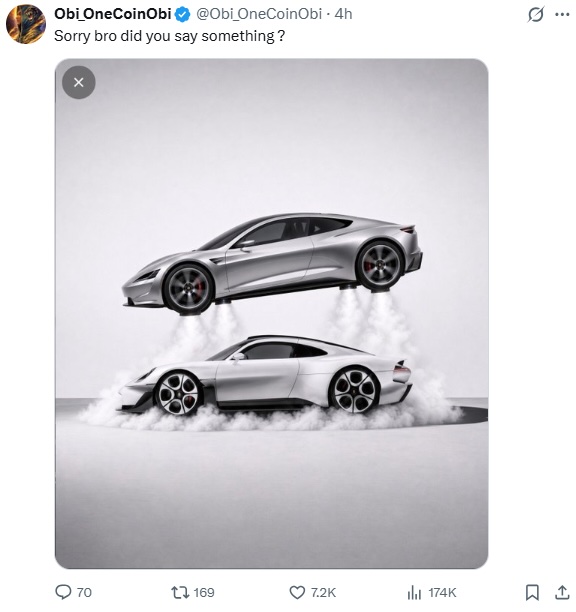
Unless your car can fly, it’s not really going to wow anyone anymore. Talk about moving the goalposts!
Why the Meetings Never End
For a moment, let’s have some sympathy for the downtrodden German CEOs.
Lower Saxony (the German state) controls 20% of Volkswagen’s voting rights, holds blocking power over major corporate decisions, and appoints two members of the supervisory board.
Add Germany’s powerful unions and Volkswagen’s labor representation, and you have a carmaker whose bosses must keep politicians and workers happy ahead of the people who actually buy its cars.
So if you must choose between a faster car and a quieter plant floor, and the plant floor votes on your contract, you’d choose the plant floor every time.
As for Warren, a letter about your condiments costs her nothing. If the deal goes bad, well, she told you so. If it goes fine, nobody will remember. She got her headline about “fighting for families” either way. The senator collects the upside and bears none of the downside.
In other words, she has no skin in the game.
Musk is the opposite case. His name is on the car, and his money is in the company. When the Roadster slips, he eats a big poopburger, served up happily by the public.
Those are properly structured incentives. People with skin in the game eventually ship, because the pain of not shipping eventually hurts them.
The Credibility Caveat
Let’s not get ahead of ourselves.
Tesla hasn’t delivered a flying car to a paying customer. Production won’t even begin until 2028. It has demonstrated a remote-controlled, yet extraordinary prototype nearly nine years after the original Roadster unveiling. The airborne Rocket version isn’t approved for public roads, and its final price remains unknown.
There’s an enormous gap between a spectacular demonstration and a vehicle you can actually buy.
The fair contrast isn’t “Elon delivers, everyone else fails.”
It’s between ambitious engineering and institutional molasses.
One side is wrong about dates. The other is wrong about what century it’s in.
Wrap Up
For each stock you own, think about what has “left the ground” in the past three years.
A product. A plant. A mine. A drug. Something with a firm date and paying customers.
If the answer is a reorganization, a strategic review, or a letter to a regulator, you own a fancy meeting calendar, and meetings don’t compound your wealth.
Look at businesses that dig, build, refine, and ship, especially energy companies these days. My colleagues Jim Rickards, Dan Amoss, and Adam Sharp have been spot on about those.
I leave you with this thought: the present may belong to clowns who worry about hot sauce. But thankfully, the future belongs to people who make things fly.

Crude and Unusual Profits
Posted October 15, 2026
By Dan Amoss
The Half-Life of a Bargain
Posted October 14, 2026
By Matt Badiali
Pump and Circumstance
Posted October 13, 2026
By Sean Ring

The Crusade That Never Paid
Posted October 12, 2026
By Sean Ring

No Farewell to Arms
Posted October 09, 2026
By Sean Ring