
Posted July 15, 2026

By Sean Ring
The Taxpayer Cloning Machine
One founder just became four taxpayers.
Not four people. Four taxpayers. Same guy, same stock, same $60 million sale, but on paper, he's suddenly quadruplets.
If you’ve never heard of “trust stacking,” that’s not a poor reflection on your financial know-how. Your accountant won’t whisper about it at a barbecue because this is a Silicon Valley house special.
Until last month, The Swamp barely pretended to notice.
Now it's noticing. Sort of.
Daylight Robbery
Before you think I’m clutching at my pearls about tax evasion all of a sudden, let me make something crystal clear. I’m all for legal tax avoidance and wholeheartedly encourage it, as long as your accountant signs your tax forms with you.
But pretending you’re four people to grow your wealth at the expense of other taxpayers? I’d like to see that offense get real jail time… or a really good beating.
Now that that’s out of the way, let’s get to the onion.
Let’s start with the real tax break. Section 1202 of the tax code lets you sell stock in a qualifying small startup and skip tax on a big slice of the gain, up to $15 million of profit, per taxpayer, per company. That's great. Congress purposely built this loophole to reward people who take the real risk of building something from nothing. So far, so good.
But the rule has a loose thread. It's per “taxpayer,” not per “person.” A properly built trust counts as its own taxpayer, even though a person set it up, funded it, and still calls the shots.
So what happens next?
Before the company sells, the founder gifts chunks of stock into two, three, or four separate trusts, usually one per child. Each trust is a "non-grantor" trust. On paper, that makes it a separate person. In reality, Dad built it, funded it, and his lawyer is running the whole show.
He sells the company for $60 million, and instead of one taxpayer claiming one $15 million exclusion, you've got four taxpayers claiming 4 exclusions. Founder: $15 million tax-free. Trust for child one: same. Trust for child two: same. Trust for child three: same.
Add it up. $60,000,000 in gains. $0.00 taxed. This is the sort of thing that’d make Ro Khanna beam with pride.
Same company. Same sale. And it’s the same man who built it and still controls it. The only thing that multiplied was the tax break and its accompanying paperwork.
The founder takes all the control and keeps all the say. The "separate taxpayers" he created took none of the risk, because they're not really separate at all. He gets the multiplied tax break. You get to make up the difference, one dollar of your own tax bill at a time.
It’s an outrage!
This Isn't Asset Protection
I like trusts and support the idea of them. Building a digital fortress around what your wealth is smart. I'll defend that move all day long. A dynasty trust for your grandkids, set up years before anyone's talking about a sale, with true beneficiaries and real control handed over? Now that's foresight.
Trust stacking isn't that. It's the same man wearing a different hat in every room, collecting a separate prize each time. The trusts aren't guarding an asset from a threat. They exist to multiply a number Congress clearly meant to apply once per human being.
Treasury's own tax policy chief, Kenneth Kies, said it plainly in May: "We don't like stacking." That's a man watching a $15 million exemption get photocopied into $60 million and realizing nobody had been minding the copier. I hope he makes good on his implied threat and takes these guys to the cleaners.
The Good News
The IRS already has the tools to shut down this abuse, and, lo and behold!, it may use them.
One rule allows the agency to treat copycat trusts as a single taxpayer if its only real purpose is to dodge tax. Another lets it look past a "gift" made days before a sale is already locked in. A third looks at substance over paperwork, and side deals that quietly route money back to dad don't survive that test.
None of this threatens the honest use of trusts. A real trust for a real grandchild, built years ahead of any sale, with true control handed over, is still as safe and smart as it always was. What's closing is the door built purely to clone a taxpayer out of thin air.
Wrap Up
This is an old story wearing new paperwork.
A rule written for regular people gets a trap door installed for whoever can afford the lawyer who knows where to install it. What's different this time is that the people holding the keys to that door just admitted, in public, that they know it's there.
When the IRS’s guidance lands, it won't kill trusts. But it'll bury the cloning. Unfortunately, the same firms selling "aggressive" stacking today will be selling "compliant" planning next quarter.

The Vote That Never Was
Posted July 14, 2026
By Sean Ring

Gas, Guns, and Profits
Posted July 13, 2026
By Matt Badiali
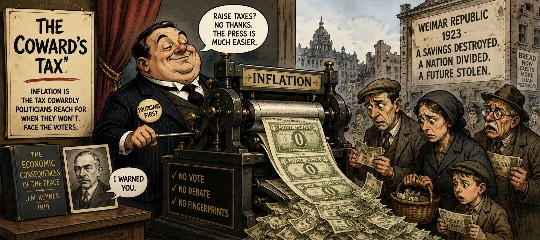
The Coward's Tax
Posted July 10, 2026
By Sean Ring

Lapdog Loop
Posted July 09, 2026
By Sean Ring

China’s Touch of Death
Posted July 08, 2026
By Byron King
