Posted March 26, 2026

By Sean Ring
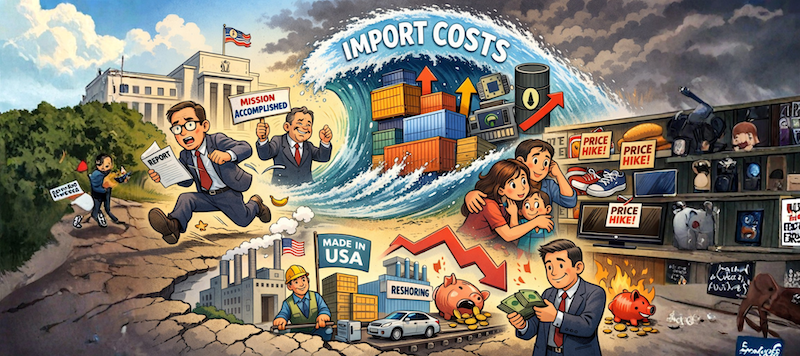
The Looming Price Tsunami
They told you they beat inflation. Politicians took their bows. The Fed hinted at rate cuts. The financial press ran the "soft landing" headline about a thousand times.
Then a quiet government report dropped last week. The bureaucrats tripped on their victory lap.
February import prices jumped 1.3% in a single month. That's the biggest one-month spike since March 2022. That’s back when inflation was the only thing anyone could talk about. Strip out fuel, and the number is still up 1.1% for the month, up 2.5% year over year. It’s the strongest annual gain since October 2022.
This news is less of a blip and more of a warning shot.
The Number Nobody Talks About
Most people track CPI. Some track PPI. Almost nobody tracks import prices until it's too late.
Import prices are the first link in the chain. They're what U.S. buyers pay to get goods into the country. That’s before the wholesaler… and the retailer… marks it up. And that’s before it hits your cart.
When import prices change, everything downstream eventually follows.
Here's what moved in February:
Fuel imports: up 3.8% for the month. Industrial supplies: higher. Capital goods (the machines, the equipment, the chips, and electronics) that run the economy: up 1.3% in a single month. That was the largest monthly jump in capital goods since the data series began in 1988.
Breadth was the other ugly part. Prices rose for industrial supplies, capital goods, consumer goods, and food. When a price shock hits multiple sectors at once, you can't chalk it up to one bad weather event or one disrupted shipping lane.
How It Gets to Your Kitchen Table
Here's the basic pipeline:
Import prices go up → Producer prices follow → Consumer prices follow.
It doesn't happen overnight. Usually takes a few months. But the research is clear: when import costs spike, a meaningful share of that cost passes through to the prices you actually pay. Goods first — clothing, electronics, appliances. Then, over time, anything that gets made or moved using imported parts or equipment.
For the past two years, this pipeline has been running in reverse. Supply chains healed. Import prices fell. Falling goods prices helped drag inflation lower without the Fed having to hike rates. Powell looked competent and in charge.
That tailwind is now flipping to a headwind.
And here's the timing problem: February's data doesn't yet capture the full hit from rising oil and shipping costs tied to tensions in the Middle East. That's a March story. So you're already seeing heat in the pipeline, before the bigger energy shock has fully landed.
Powell's Ugly Choice
The Fed has been telegraphing rate cuts. Markets have been pricing them in. The political pressure to deliver them is real.
But cut into a re-accelerating inflation pipeline, and the FOMC risks blowing up whatever credibility the Fed rebuilt over the last two years. You could re-anchor inflation expectations at a higher level — meaning people start expecting things to cost more, which makes them cost more. Self-fulfilling.
Don't cut, and you risk pushing an already fragile economy over the edge. Consumers are stretched. Credit card debt is at record highs. Private credit is a mess. The housing market is frozen. Much of the "growth" you see in the data is fueled by government spending that can't continue forever.
This setup bears all the hallmarks of stagflation: high prices, slowing growth, and no good options on the table.
The market is still stuck trading the rosy version of events. Import prices tell a different story.
What It Does to Your Wallet
You won't see "import prices up 1.3%" written on a price tag, but you'll feel it.
Americans import clothing, shoes, electronics, and most household goods quite heavily. When costs rise, retailers shorten sales, shrink discounts, and raise prices.
The capital goods number matters, too. When the machines and equipment that make things get more expensive, that cost bleeds into the final price of cars, appliances, construction projects, and anything built with imported parts. It takes longer to show up… but it eventually shows up.
If high rent, insurance, and food costs are already squeezing you, another round of goods inflation makes you feel like the walls are closing in. Wages may still be growing in nominal terms. But if prices rise faster, you're falling behind anyway.
Practical move: if you've been putting off a big-ticket purchase — appliances, electronics, a vehicle — the math may favor pulling it forward before the next price-hike cycle hits.
Where the Money Moves
Higher import prices don't just hurt. For some companies, they're an opportunity.
If imports get more expensive, domestic producers look better by comparison. The reshoring and U.S. manufacturing trade, which had become a bit of a crowded consensus, gets a fresh fundamental/macro reason to run.
I don’t usually look at ETFs, but here are two opportunities for you to check out:
- Tema American Reshoring ETF (RSHO): focused on companies tied to U.S. manufacturing and infrastructure. The direct bet is that domestic capacity will replace imports.
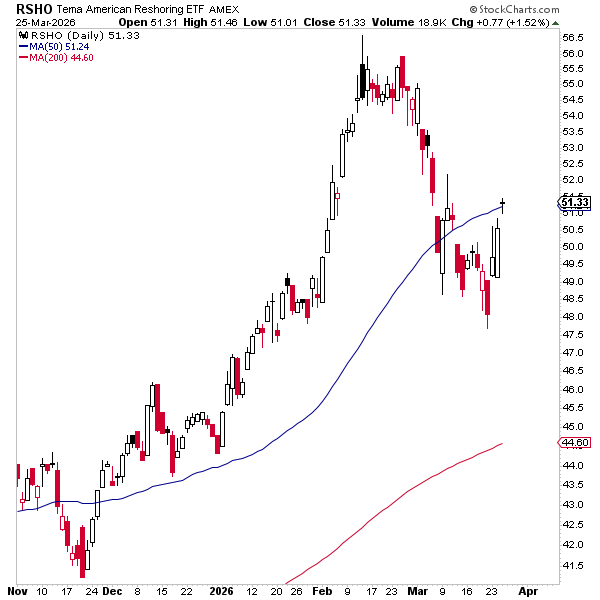
We’ve had a bit of a pullback lately, but the chart is still healthy. Right now, it looks like a good entry point.
- iShares U.S. Manufacturing ETF (MADE): BlackRock's version of the same theme, positioned for the U.S. manufacturing up-cycle.
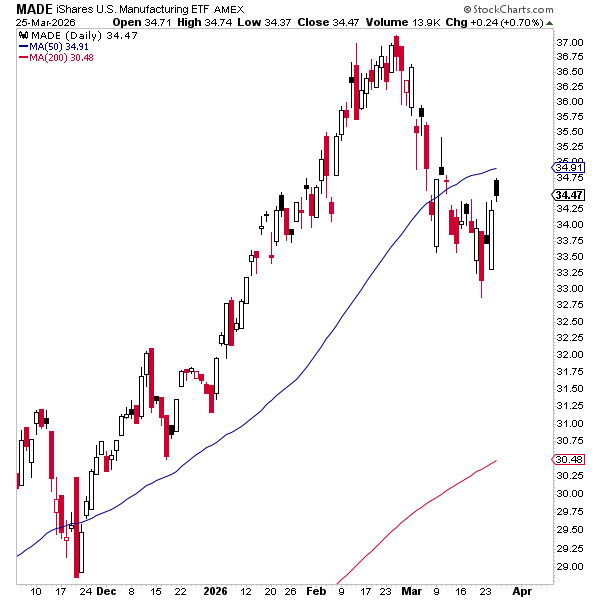
This chart is similar to RSHO’s, but it hasn’t yet recaptured its 50-day moving average. I expect it will soon. Again, it looks like a good entry point.
Wrap Up
A single line in the BLS report — "import prices for capital goods posted the largest advance since the series began in 1988" — will end up mattering more to your portfolio and grocery bill than anything the Fed says at its next press conference.
Powell’s victory lap is over. The next leg of this story begins.
Plan accordingly.

Loan Shark in a Three Piece
Posted March 25, 2026
By Sean Ring

Do This With Unseen Costs
Posted March 24, 2026
By Sean Ring

The Unseen Cost
Posted March 23, 2026
By Sean Ring

Badiali: CRITICAL Aluminum Update
Posted March 20, 2026
By Matt Badiali

When Everything Falls at Once
Posted March 19, 2026
By Sean Ring
