Posted July 06, 2023

By Sean Ring
Sicilian Treats
Happy Thursday from the north coast of Sicily.
It’s incredible, but we’ve barely explored this island. We landed in Palermo, drove the distance to Pollina, and took a day trip to Cefalu. But it was enough for us to fall in love.
Sometimes I wonder what I was doing when I lived in London. Then I remember I spent all my time in the pubs. But I’m still amazed at the places I didn’t travel to while I lived there.
Sicily is one of those places. It’s only a 3-hour flight from London, yet I have never visited before this trip.
And, as I said, we haven’t seen much of it.
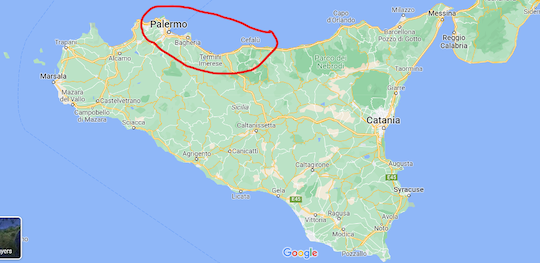
That’s it.
What’s impressive is that about a dozen civilizations have conquered Sicily. That’s why it’s such a hodgepodge of cultures. From Norman to Arab to Spanish to Italian, to name a few, Sicily combines all these disparate cultures to make a unique amalgamation.
But in this edition of the Rude, I’ll take you on a small excursion on the northern coast of Sicilia…
Palermo
Palermo is the capital of Sicily and its largest city.
It’s also a dirty city. Yes, it’s charming as hell, but it isn’t Singapore-clean. That’s for sure!
We didn’t mind, as we went on a day trip to see most of the monuments, markets, and churches.
I’ll take you on the quick tour we took. Here’s a map to help out:
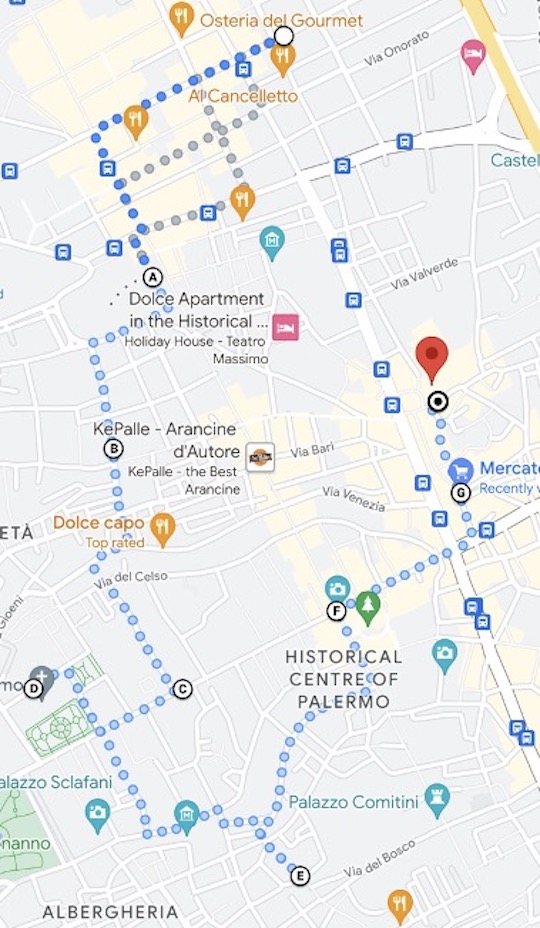
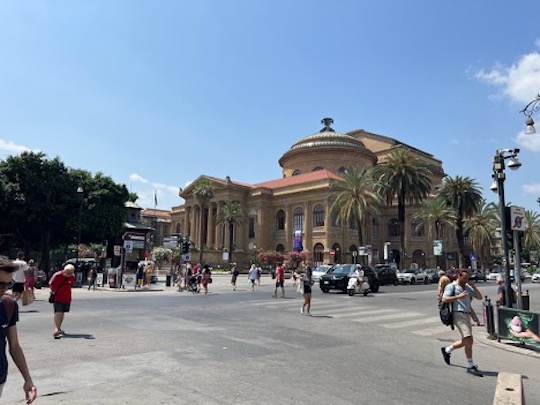
A. Teatro Massimo
This is an amazingly cool building. We didn’t get to go inside, but the outside was good enough. Construction started on 12 January 1874, but was stopped for eight years from 1882 until 1890. Finally, on 16 May 1897, twenty-two years after laying the foundation stone, the fourth largest opera house in Europe at the time was inaugurated with a performance of Verdi's Falstaff, conducted by Leopoldo Mugnone.
B. Chiesa di Sant’Agostino
Yet another beautiful church (chiesa in Italian) named after the Saint Augustine of Hippo. “Give me chastity and constancy, but not yet,” the dirty old saint was reputed to have asked of God.
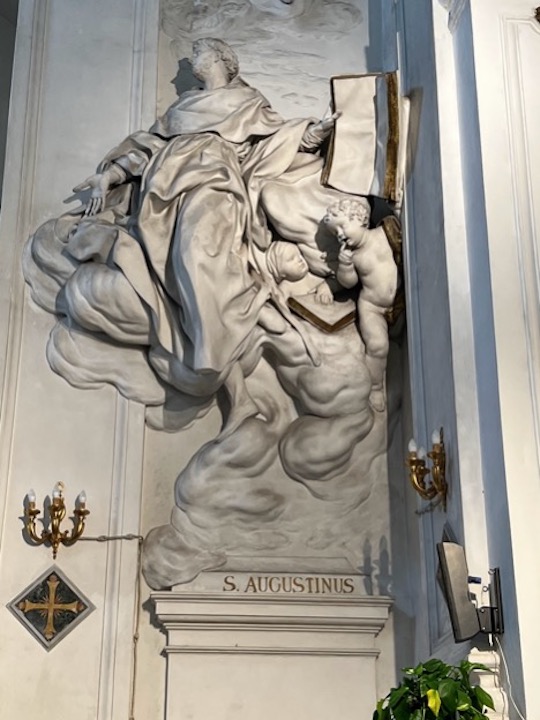
Credit: Sean Ring
C. Chiesa del Santissimo Salvatore
The Church of Most Holy Saviour is a Baroque-style Roman Catholic church located on Via Vittorio Emanuele in the ancient quarter of the Albergaria.
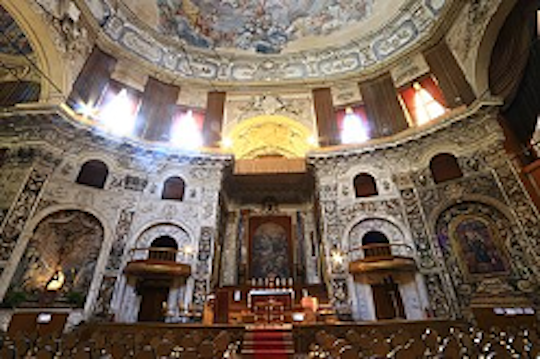
Credit: Wikipedia (sorry, I forgot to take a pic there!)
D. Cathedral of Palermo
The big one in Palermo, it was originally built in 1185.
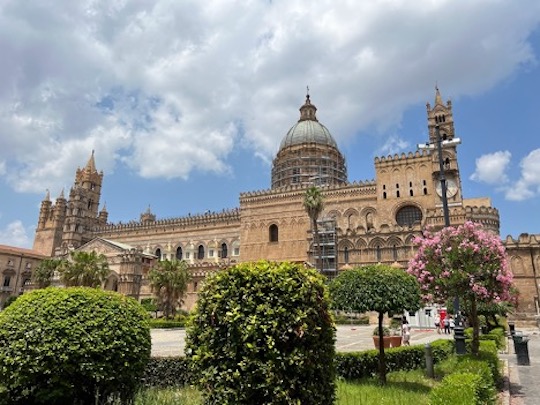
Credit: Sean Ring
E. Mercato di Ballaro
A great food market. I enjoyed the best caponata and frutti di mare I’ve tasted. (Ok, my mother still makes better caponata. But she’s the only one. And it was my grandmother’s recipe.)
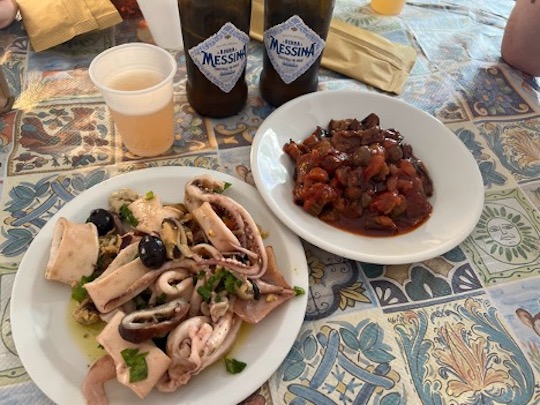
Fruitti di Mare, Caponata, and the obligatory bottles of Messina; Credit: Sean Ring
F. Quattro Canti
The “Four Corners” is where Palermo’s main sections meet.
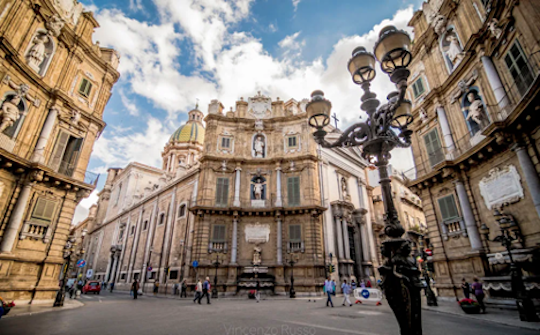
Credit: The Journal of Sicily

G. Mercato della Vucciria
La Vucciria is an ancient, large market or bazaar area and neighborhood, with shops and tables selling products, produce, and foodstuffs in the ancient quarter of Castellammare of central Palermo.
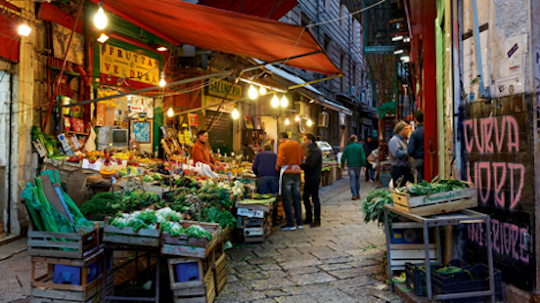
Credit: foodism.co.uk
That’s the tour. Amazing.
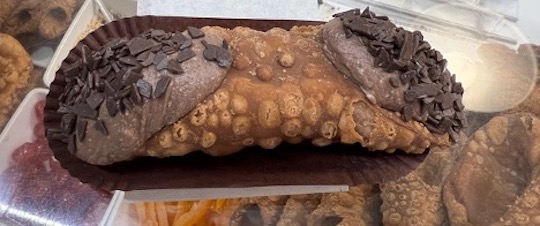
But before I go, this may be the best thing I’ve ever tasted: chocolate cannolo (cannoli is plural, you Sopranos fans out there!)
Pollina
Pollina is where our resort is located. It’s a kid-friendly place, so not really for honeymooners and such.
But it’s located on a promontory with great views of Cefalu’s Rock. It’s got nice amenities, but it’s not a five-star resort.
Micah loves it because the pools are shallow, though he nearly drowned himself by jumping in the wrong end. Yes, Dad came to the rescue, shirt on and all.
Of course, they should’ve named the kiddie pool “Golden Pond” for obvious reasons.
Here’s a picture of some severely underrated Sicilian wine from our clifftop restaurant:
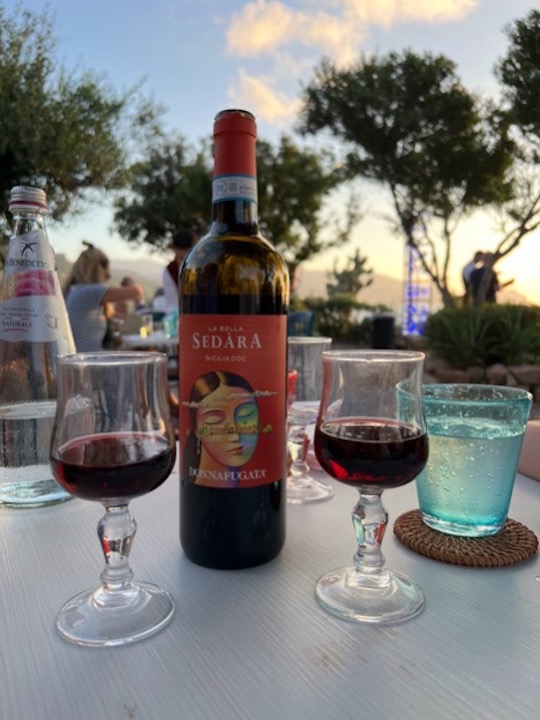
Credit: Sean Ring
Cefalu
Now this place blew me away.
Not only is it a fantastic seaside town full of history, but it’s where one of my favorite buildings on earth is.
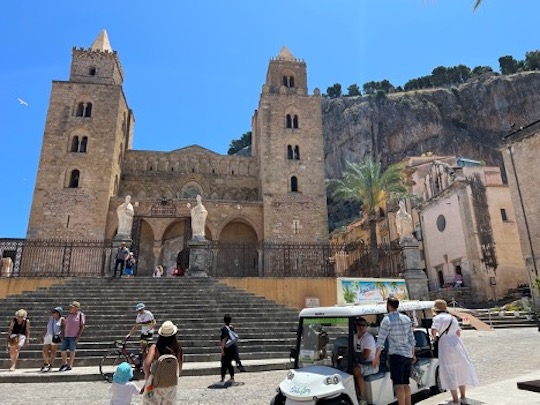
The Duomo di Cefalu with the Rock of Cefalu behind it; Credit: Sean Ring
Roger II started building the Duomo di Cefalu after he was shipwrecked on the Cefalu coast during a horrific storm. It looks like a castle and a cathedral smashed together.
The cathedral was built to serve as an exquisite place of worship and a symbol of the Norman kingdom's power and prestige. It was designed by skilled Byzantine and Arab craftsmen, blending elements of Romanesque, Byzantine, and Islamic architectural styles.
Its exterior is characterized by its imposing fortress-like appearance, sturdy stone walls and two soaring towers. The main entrance showcases a beautiful Byzantine-style bronze door adorned with intricate reliefs depicting biblical scenes and figures.
Inside the cathedral lies a stunning interior adorned with exquisite mosaics. The central apse houses a giant mosaic of Christ Pantocrator, displaying a majestic and serene image of Jesus with outstretched arms. The walls and ceilings are adorned with vibrant biblical scenes, saints, and ornate geometric patterns, all crafted with meticulous attention to detail.
One notable feature of the cathedral is the inclusion of Arabic inscriptions in the mosaics, reflecting the multicultural influences of the time. This blending of artistic traditions is a testament to the harmonious coexistence of different cultures in medieval Sicily.
The Duomo di Cefalù has undergone various modifications and restorations throughout its history. Earthquakes in the 16th and 17th centuries caused damage to the structure, leading to subsequent repairs and alterations. Despite these changes, the cathedral retains its unique character and architectural significance.
Today, the Duomo di Cefalù is a UNESCO World Heritage site and remains an important religious and cultural landmark in Sicily.
Wrap Up
I hope you enjoyed the mini-tour around northern Sicily. As we leave tonight, I’ll be writing tomorrow’s piece from Asti.
If you have any questions about the trip, write me at feedback@rudeawakening.info.
Have a great day!

No Quarter in March
Posted April 01, 2026
By Sean Ring

Bessent Misses the Mark
Posted March 31, 2026
By Sean Ring
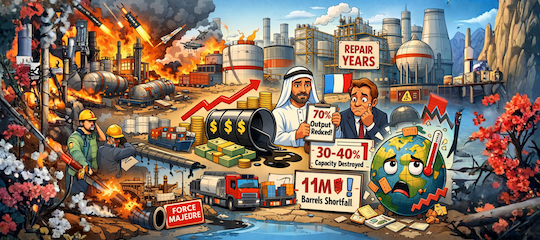
The Iran War Will Drive Costs Higher for Longer
Posted March 30, 2026
By Matt Badiali
The Cavalry Isn’t Coming
Posted March 27, 2026
By Sean Ring

The Looming Price Tsunami
Posted March 26, 2026
By Sean Ring
