Posted April 06, 2026

By Byron King
Iran's Molecular Warfare
Somewhere in the Persian Gulf right now, a tanker captain is deciding whether to transit the Strait of Hormuz. That decision — multiplied across dozens of vessels every day — is the one real weapon Iran has left.
American bombs and missiles have done their work. In less than a month, over 10,000 distinct hits from U.S. and Israeli air power have demolished vast swaths of Iranian military and industrial capabilities. And note: Israel's air power is, at root, American air power… with a different paint job.
Iran’s air defense network — a mix of old U.S. and European electronics, along with newer, allegedly advanced Russian and Chinese equipment, all cobbled together by homegrown Iranian engineering — went down under initial attacks via cyber and space, supplemented by kinetic hard-kills from drones and purpose-built missiles created for exactly this mission.
Iran’s quarter century of capital investment in air defense was destroyed in a few hours. Cruise missiles, rocket artillery, and stand-off weapons hit Iranian missiles, radars, command centers, ammunition storage areas and related control nodes.
Now, B-1s and B-52s run near-daily bombing raids, supplemented by a wide array of other aerial platforms above Iran, looking down to nail targets. (And you may have seen video of A-10 ground attack aircraft firing 30-millimeter cannon rounds and making their iconic “Brrrrrt” sound.)
Iran’s navy — roughly 140 vessels — has been annihilated, a scale of maritime destruction not seen since World War II. Its air force is now scrap aluminum and scorched parts, including the last remaining specimens of Iran's fleet of venerable 1970s-vintage Grumman F-14 Tomcats.
Underground tunnel complexes, built over the past 25 years at immense expense and opportunity cost to Iran's economy — which is exactly why many cities in Iran lack sufficient clean water, and much else — have been systematically targeted.
Indeed, Iran’s conventional military is broken. But the war isn't over.
The Negotiation Nobody’s Admitting To
As I write this, news accounts are burning the wires with stories of how President Trump’s reps are negotiating with Iranian reps about concluding hostilities. We’ll see, right? In my experience, wars end faster than anyone expects — and slower than anyone hopes.
In Iran, key players deny any sort of negotiations with Trump, who they regard as a tool of Satan. They insist that nobody is speaking with anybody, and they’ll fight-fight-fight until the U.S. loses, departs in abject humiliation, and agrees to pay massive reparations.
To borrow a phrase from Shakespeare: They doth protest too much, methinks.
My hunch is that Trump’s people and Iranian counterparts are discussing how to conclude the war, but the screaming hardliners were never invited to the table, although they still remain entrenched within a decapitated regime that runs on the inertia of power and repression.
Meanwhile, the most adamant Iranian opponents to a peace deal are now on many other people’s target-and-kill lists. Which is to say they currently have a megaphone — but longer-term they’re dead men walking, awaiting a bullet or bomb with their name on it.
And that cleanup operation is already taking shape. Reports that the Army’s 82nd Airborne Division is moving to the Middle East have fueled speculation about an invasion. But don’t leap to conclusions. Yes, the 82nd can put brigades of capable paratroopers on anyone’s front lawn — but that’s not what this movement is about. The 82nd is not an invasion force. It’s an “uplift” and contingency force.
Something else is going on — likely special operations — and we may not learn about it for a long time. The effort could be American, Israeli, or involve other Gulf states — the latter having suffered as Iran attacked their infrastructure to strangle their economies.
Which brings us to the bigger picture. The first phase of this war is over, while the second is already underway. And it's being fought not with bombs but with molecules.
Iran Targets the Supply Chain of Everything
Here's what Iran still controls: the Strait of Hormuz. It’s not exactly “closed,” but certainly restricted — and that’s enough.
On any given day before this war, roughly 20% of global oil and 22% of global liquefied natural gas (LNG) moved past Hormuz. Throttling those flows doesn’t just spike energy prices. It attacks the feedstock for nearly everything the modern world makes and moves.
Hardly anyone ever has direct contact with crude oil in its wellhead form as petroleum. But oil goes to refineries and becomes gasoline, kerosene, jet fuel, diesel, and much else — from tar and asphalt to chemical precursors for a very long list of things in modern life (including some antibiotics and heart medications).
LNG may be the gas you use to heat your home or cook, but it is also critical in sectors ranging from power generation to the chemical industry. So, when that flow of molecules constricts, the disruption cascades in ways most people never see coming — because the gas is buried deep inside supply chains most people never think about.
Iran’s strategists know this. That’s their play.
Molecular Warfare
Take urea — chemical formula CH₄N₂O — a primary component of fertilizer as well as explosives. It’s manufactured from natural gas, and due to regional geology and many decades of industrial development, the Gulf region is a keystone of global urea production and export, primarily due to cheap, abundant natural gas.
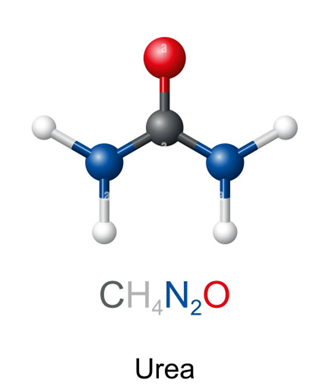 Image Source: SciencePhotoGallery.com
Gulf urea is sold into agricultural markets across Europe, Africa, Asia, South America, and Australia. And even though the U.S. has ample gas supplies and manufactures a good deal of its own urea, American farmers are still subject to global price shocks that ripple through grocery stores everywhere.
Grocery shopping is up to you, but finding investment ideas is in our wheelhouse at Paradigm Press. One company that’s positioned to benefit from rising hydrocarbon and fertilizer prices is CF Industries (NYSE: CF), a major producer of ammonia and, by extension, urea. CF should see higher revenues and margins on its fertilizer products. (Note: CF is a current Strategic Intelligence portfolio holding.)
Also, Petrobras (NYSE: PBR), Brazil’s oil giant, which operates far from the Middle East, is a major global oil and gas producer supported by a strong industrial base.
Then there’s helium — an element almost nobody thinks about until it disappears.
For fascinating geological reasons, Qatar’s natural gas contains a small amount — about 0.5% — of helium, recoverable in the liquefaction process for methane. Helium is important for many reasons: it's an inert gas for baking semiconductors; for creating a helium atmosphere in welding; for deepwater diving and related seafloor work; for cooling magnets in medical instruments like an MRI; and for purging lines in spacecraft.
It’s fair to say, for instance, that before war broke out, a typical space launch — by NASA, U.S. Space Force, SpaceX, take your pick — used about a million dollars of helium for line purge and maneuvering thrusters. The helium requirement remains, but the cost just climbed.
Perhaps more problematic, global-scale semiconductor industries in Taiwan and South Korea will take major hits in the not-too-distant future — roughly 60 to 90 days out — if they don’t get their helium supply back online.
One company that offers solid exposure to helium and much else is ExxonMobil (NYSE: XOM). XOM needs no introduction — oil and gas, refining, lubricants, chemicals, and more. But XOM also operates a facility in LaBarge, Wyoming, that produces about 20% of the world's helium supply.
Finally, other atoms and molecules disrupted by the Iran war are sulfur (S) and sulfuric acid (H₂SO₄). Both elemental sulfur and its namesake acid are critical for a very long list of chemical processes, and certainly for mineral refining operations.
One of my chemistry professors called sulfuric acid “the pig iron of the chemicals industry” — and he was definitely on target. You’ll find it in most copper refining operations, along with the refinement of many other metals like steel and nickel. It’s used, too, in many types of batteries, in the production of phosphate fertilizers that complement urea, and across a long list of other industrial processes.
One U.S. company that manufactures sulfuric acid is Olin Corp (NYSE: OLN) — also part of our Strategic Intelligence portfolio. It sells sulfur products into the industry and agricultural fertilizer markets. Olin’s primary feedstock comes from North American sources — again, far from the Gulf region.
With Hormuz restricted, we now live in a new era of physical scarcity for these important substances — and more than likely will see much higher prices for both primary materials and downstream products.
In a marketplace of rising prices, look for increased revenues and profit margins for these companies as events unfold.
Your Wallet, On the Front Line
The Strait of Hormuz is a 21-mile-wide chokepoint. In some respects, it’s among the “front lines” of this war. In a broader sense, Hormuz is the mechanism by which Iran can reach out and harm every economy on earth — including yours.
Beware panicking, selling out and booking losses — because one of these days, the war will end and markets will rise. You don’t want to miss that.
Definitely avoid new debt. Hold extra cash, if you can. Hang onto your physical gold and silver, because recent sell-downs were mostly due to people raising quick cash, and not a harbinger that the dollar has stopped losing long-term purchasing power.
Bottom line: Iran’s strategists have created global shortages of critical materials, spiked prices and disrupted trade on an international scale. They haven’t won on the battlefield, so now they’re coming for commerce, and the molecules on which commerce depends.
As outsiders, it’s difficult for any of us to say how or when things will resolve. But be wary of splashy headlines, and watch the real war, including the conflict over molecules.
As always, thanks for subscribing and reading.

Handing China the Future of Transportation
Posted April 03, 2026
By Matt Badiali

Two More Weeks to Flatten the… Iranians
Posted April 02, 2026
By Sean Ring

No Quarter in March
Posted April 01, 2026
By Sean Ring
Bessent Misses the Mark
Posted March 31, 2026
By Sean Ring
The Iran War Will Drive Costs Higher for Longer
Posted March 30, 2026
By Matt Badiali