Posted December 17, 2025

By Sean Ring
Icing The Green New Scam
For the best part of this century, policymakers, regulators, and assorted climate evangelists told us the same story: electric vehicles (EVs) were the future, and internal-combustion engines (ICEs) were relics.
All we needed to do was hurry things along with mandates, bans, subsidies, and, well, moral pressure. Governments assured cosmopolitans that we, the flyover country consumers, would adapt. Industry would comply. Resistance was futile.
The government would save the planet from us pesky meat-eating, gas-guzzling, oil-loving landowners.
Members of PETA, the Sierra Club, and Greenpeace would rejoice at a job well done.
Greta would go on to host The View.
Reality, however, has a nasty habit of ignoring press releases.
A Ford In the Road
Buy a Ford,
They’re the best.
Ride a mile,
Walk the rest.
- Philosopher-Truck Driver John Ring
I remember my father loving Lee Iacocca and his Chrysler commercials, imploring Americans to buy American. And yet, when we finally bought our forest green Ford Bronco (our first SUV, which I adored) back in the early 90s, out came Pop’s favorite Ford rhyme.
When Ford’s latest money-losing announcement came out, the first thing I thought of was, “Buy a Ford…” The second thing I thought of was my friend and colleague Jim Rickards, smiling ear to ear.
Yes, the Green New Scam is taking some hits.
Last week, Ford detonated one of the largest credibility charges the EV market has ever seen. The company announced a jaw-dropping $19.5 billion (with a “B”) write-down on its electric-vehicle investments.
In effect, Ford has admitted years of capital spending were based on demand projections that never materialized, and honestly, never were going to happen.
This write-down isn’t a mere marginal accounting adjustment. It’s a painfully public confession that the numbers don’t work at scale — not yet, and maybe not anytime soon.
If only Ford didn’t listen to the poli sci majors running the government!
Ford’s move was all about survival. EV losses had piled up, inventory was backing up, and customers weren’t lining up the way planners expected. Seriously, can you imagine a cowboy walking into a Ford dealership to check out an F-150 and saying, “Does this come in electric?”
It’s embarrassing.
So Ford did the previously unthinkable in the world of political signaling: it followed consumer behavior instead of government targets. Hooray!
Management cut production. It scaled back EV ambitions. Hybrids and internal-combustion models, the very technologies regulators have spent years trying to kill, were suddenly back at the center of the strategy.
That alone should have ended the fantasy. But the real tell came from Europe.
Making an EU-Turn
The most aggressive jurisdiction on Earth in banning gasoline and diesel cars, the European Union, is retreating from its own prohibition on combustion engines.
After years of insisting that ICE vehicles would be outlawed by 2035, Brussels is now carving out exceptions and softening enforcement. It simply has no choice, as it’s under pressure from loss-making automakers, soon-to-be-unemployed workers, and governments staring down deindustrialization.
The reason is simple: the auto industry cannot survive on empty slogans, and voters don’t live inside policy models.
This is what happens when political ambition outruns engineering reality.
Electric vehicles do work in some contexts. They make sense for specific drivers, in certain geographies, with certain income levels, and with reliable charging access. But the idea that governments could impose EVs universally, rapidly, and coercively was always detached from how markets actually function.
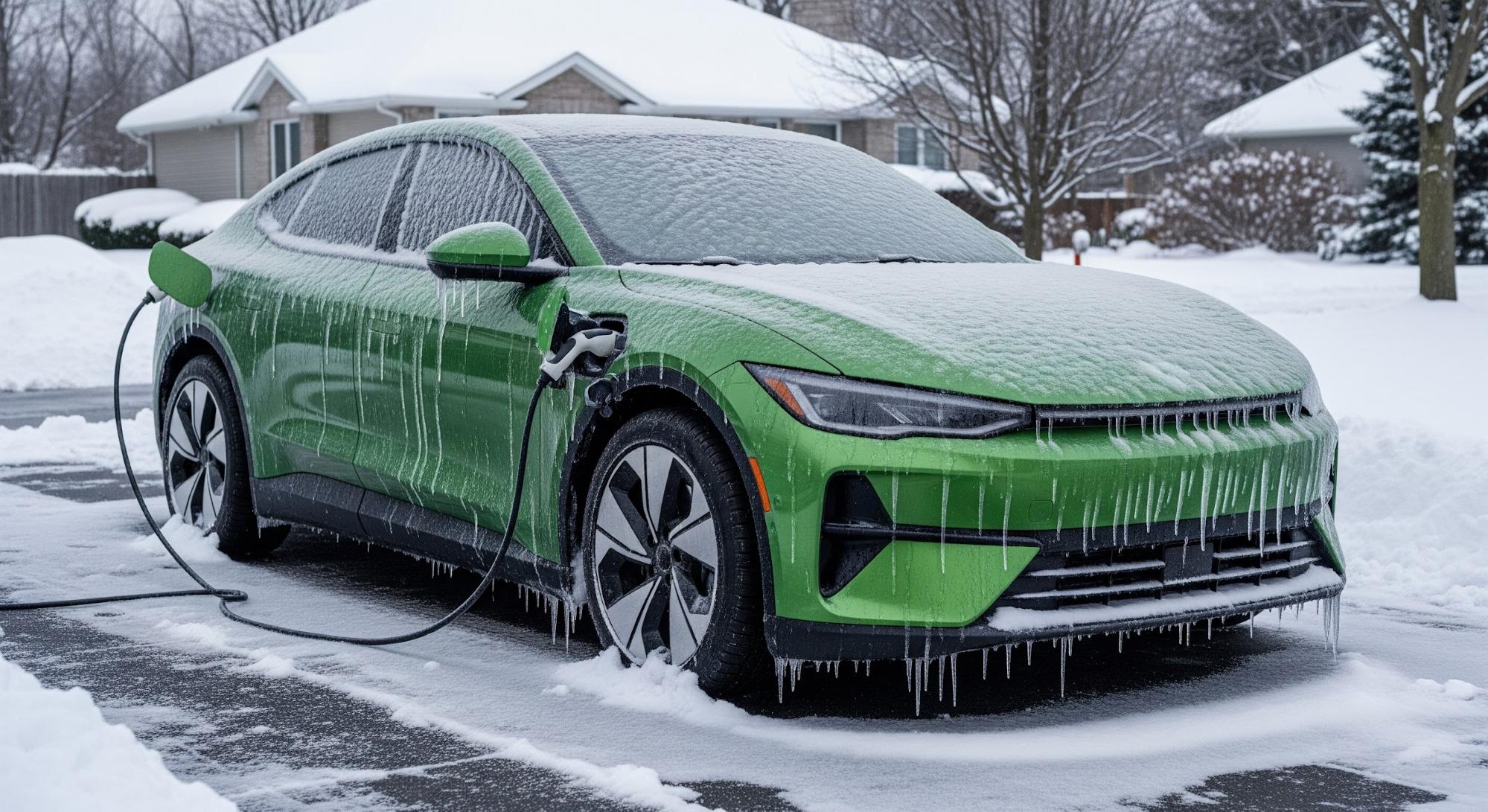
Batteries remain expensive. Charging is painfully slower and less reliable than fueling a conventional car. Cold weather degrades performance. Range anxiety is real.
Most importantly, when subsidies fade, so does EV demand.
Governments tried to solve these problems by decree. They assumed that if EVs were mandated hard enough, manufacturers would innovate faster and consumers would buy. Instead, they got distorted capital allocation, stranded investments, and massive write-downs like Ford’s. You can’t force economic adoption by punishing more expensive alternatives before a cheaper replacement is ready.
What policymakers also underestimated was the resilience of internal-combustion technology. ICE vehicles are cheap relative to EVs, fast to refuel, easy to repair, and supported by infrastructure built over more than a century.
Hybrid vehicles offer practical emissions reductions without requiring consumers to change their travel habits completely. They’re solutions that don’t introduce new problems.
And they’re the only reason why the EV transition didn’t collapse all at once.
At last, we have the evidence: carmaker accounting statements have written checks government rhetoric can’t cash.
Wrap Up
The lesson isn’t about electric vehicles themselves. EVs will continue to exist, improve, and find their place. The lesson is about the folly of technological authoritarianism, the belief that complex systems can be redesigned from the top down without regard for cost, behavior, or tradeoffs.
Markets adopt new technologies when they are genuinely superior to existing ones. They don’t need bans to do it. The smartphone didn’t require a war on landlines. Streaming didn’t need a legal prohibition on DVDs. Those transitions happened because companies offered them and consumers chose them at the cash register.
The Green New Scam inverted that logic. Instead of making EVs so compelling that internal combustion engines faded naturally, governments tried to outlaw the existing ICE technology first. The result was backlash, capital destruction, and retreat.
We’re witnessing yet another central planning failure. Policymakers confused aspiration with readiness and treated dissent with smug dismissal. Ford’s $19.5 billion charge and the EU’s backpedaling are simply the bills coming due.

Swamp, Brains, and the Game
Posted December 19, 2025
By Sean Ring

8 Things That Will Turbocharge The Gold Price
Posted December 16, 2025
By Jim Rickards
Can Miners Double Again?
Posted December 15, 2025
By Sean Ring
How FDR Put America Behind Golden Bars
Posted December 12, 2025
By Byron King
Swamp Thing
Posted December 11, 2025
By Sean Ring