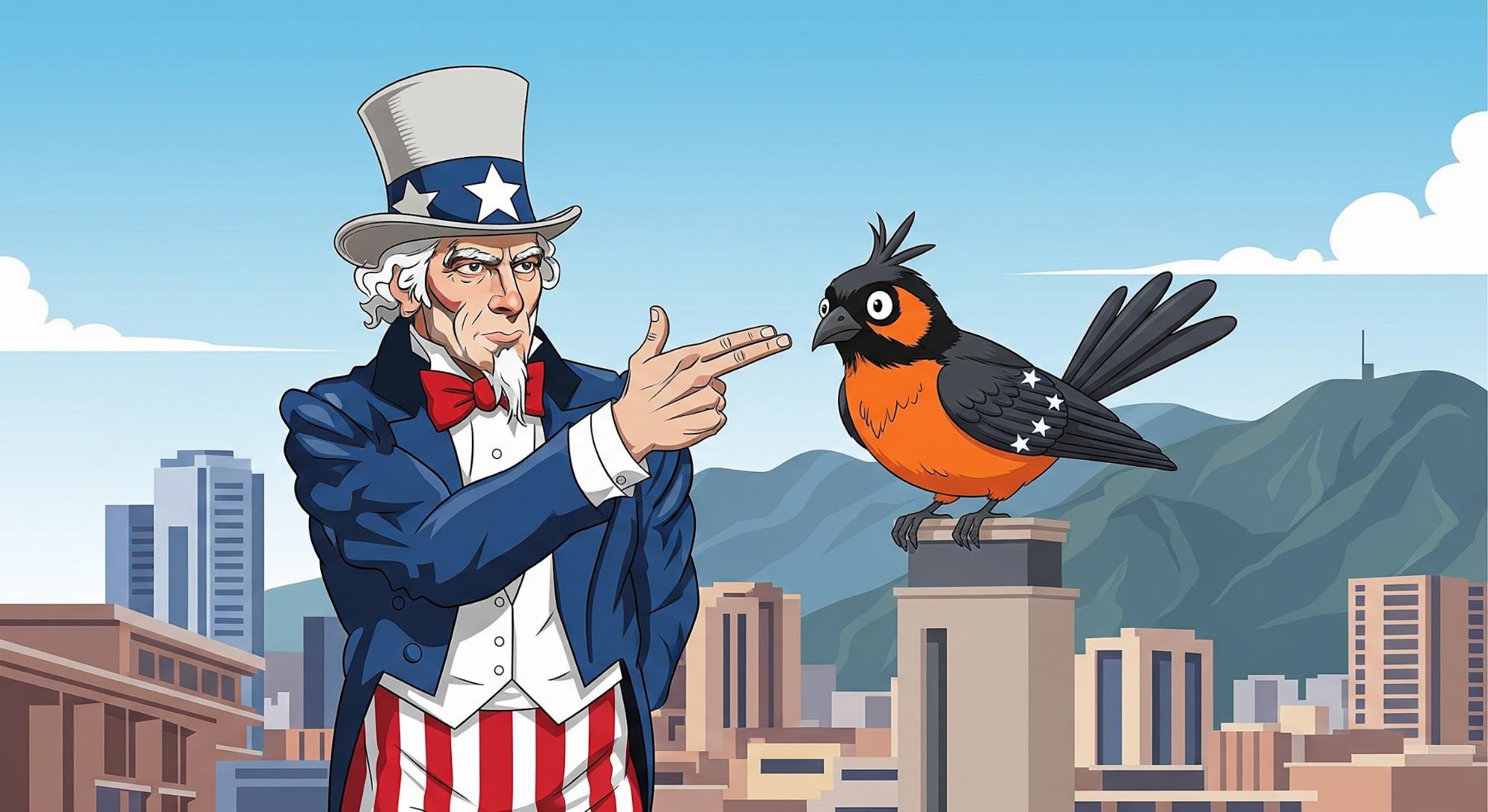
Posted January 07, 2026

By Sean Ring
From The Shores of Tripoli to Caracas
Thomas Jefferson was America’s philosopher-president who hated standing armies and distrusted foreign entanglements. Yet, Jefferson also refused to let petty tyrants shake down a young republic.
America remembers Jefferson’s clash with the Barbary pirates at the dawn of the 19th century as the moment the United States refused to give in to extortion. Two centuries later, the USG’s aggression in Venezuela begs the uncomfortable question: has the republic that once fought tribute quietly perfected its own version of it?
Jefferson and the Barbary Shakedown
In the late 1700s, American merchant ships entering the Mediterranean ran into a racket that had operated for centuries. The Barbary states of Tripoli, Tunis, Algiers, and Morocco authorized corsairs to seize ships, enslave crews, and ransom prisoners. European powers paid up. Tribute was cheaper than war.
The United States did too, at first. Weak, broke, and lacking a navy, it bought temporary safety the way everyone else did.
Jefferson hated this system.
As secretary of state—and later as president—he argued that paying tribute only invited more demands. The pirates didn’t want peace; they wanted leverage. And leverage grows when it’s rewarded.
When Tripoli demanded sharply higher payments in 1801 and symbolically declared war by cutting down the U.S. flagstaff, Jefferson responded with force. He sent ships, imposed a blockade, and ordered American commanders to “chastise their insolence.”
Here’s Christopher Hitchens explaining why:
In 1788, when the United States was barely a country, it was having its sailors taken as slaves by the Barbary States, the states of the Ottoman Empire in North Africa… Tripoli. Its people, its crews, carried off into slavery. We estimate one and a half million European and American slaves were taken between 1750 and 1815.
Jefferson and Adams went to their ambassador in London and said, “Why do you do this to us? The United States has never had a quarrel with the Muslim world of any kind. We weren't in the Crusades. We weren't in the war in Spain. Why do you do this to our people and our ships? Why do you plunder and enslave our people?” The Ambassador very plainly said, “Because the Quran gives us permission to do so, because you are infidels. And that's our answer.”
Jefferson said, “Well, in that case, I will send a Navy which will crush your state,” which he did, and a good thing, too!
Jefferson’s decision - the correct one, I hasten to add, despite my distaste for overseas conflicts - launched the First Barbary War, which was America’s first overseas war.
A War With Limits
Here’s the part that modern readers often miss.
Jefferson did not seek to occupy Tripoli. He didn’t try to redesign its political system. He didn’t claim a permanent right to intervene.
The goal was simple: stop paying tribute and secure free navigation for American commerce.
The war dragged on, including naval engagements and a small land expedition, and ended with a negotiated settlement. The U.S. paid ransom to free prisoners, but tribute, as an ongoing system, was broken. More importantly, Jefferson’s decision set the precedent: America would fight rather than submit to a protection racket.
This mattered. To Jefferson and his generation, tribute was an expensive way of degrading oneself and one’s country. Tribute meant accepting that normal trade required bowing to arbitrary power, and you know how Americans feel about that.
Imagine after defeating the greatest empire the world had ever seen and then having to pay off some pirates just because they thought you were “infidels.” You’d go to war, too, I hope!
Freedom means trading without permission.
Venezuela and the New Doctrine
Fast-forward two centuries.
Venezuela sits in the crosshairs of oil, migration, sanctions, and great-power rivalry. For more than a decade, Washington has layered financial, banking, and oil-sector sanctions on Caracas, targeting the state oil company PDVSA, freezing assets, and weaponizing access to the dollar system.
This past weekend, the escalation crossed a historic line.
U.S. forces struck targets across northern Venezuela in a coordinated overnight operation. A special operations team raided the residence of Nicolás Maduro, captured him and his wife, and flew them to the United States to face narcoterrorism charges.
President Donald Trump justified the raid as a law enforcement action grounded in presidential authority and explicitly wrapped it in the language of a revived Monroe Doctrine, which both allies and critics rebranded as a personalized “Donroe Doctrine.”
The message was clear: the Western Hemisphere is America’s to manage.
Conditional Access Is the New Tribute
Alongside the raid came something quieter but more consequential.
Washington now effectively controls the pace and direction of Venezuelan oil recovery. Through sanctions waivers, tariffs, and secondary penalties, the U.S. decides who buys Venezuelan crude, in what quantities, and under what political conditions. Although the President has already said he’d sell the oil to anyone, officials openly describe the strategy as a way to exclude China and other “non-hemispheric competitors.”
Compare this to Jefferson’s world.
In the Mediterranean, America was the victim of a system that conditioned trade on obedience. In Venezuela, America is the system. Access to oil, finance, shipping, and even diplomatic legitimacy is granted or denied based on compliance with Washington’s preferences.
The logic has inverted.
Where Jefferson refused to pay tribute to sail, modern America decides who must effectively pay tribute to trade at all.
The Moral Flip
Jefferson’s rhetoric was narrow and disciplined. He spoke of neutral rights, national honor, and protection from piracy and enslavement. He targeted specific practices, not entire societies.
Today’s justification bundle is far broader: counter-narcotics, human rights, energy security, and great-power rivalry all fused into a single doctrine. Political control in Caracas itself becomes a legitimate object of American military and financial coercion.
For Venezuelans and other countries quaking on the sidelines, this looks less like neutral law enforcement and more like conditional access to the part of the global economy America controls.
You may think Putin and Xi deserve it. You may think Maduro had it coming for a long time. But those arguments miss the deeper point.
Have We Become What We Once Fought?
The early republic loathed the Barbary system because it made ordinary commerce contingent on submission to arbitrary power. Tribute was a fee paid not for services rendered, but for permission to exist in the market at all.
Today, the United States commands a financial and military architecture capable of freezing reserves, paralyzing banks, and prohibiting exports, without a shot fired most of the time. When necessary, it adds precision raids and headline-grabbing (and President-grabbing) arrests.
This is far more sophisticated than mere piracy.
For Jefferson, the man who sent ships to the “shores of Tripoli” rather than keep paying for safe passage, the spectacle of a dominant America deciding who may sell what to whom, and under what political conditions, would look perilously close to the very tribute system he set out to destroy.
If nothing else, history is ironic. The republic that once refused to kneel now enforces the rules of kneeling… with better lawyers, deeper capital markets, and carrier strike groups instead of corsairs.
That’s power. Dare we say “imperial power?” Whatever it is, it’s not freedom.
Wrap Up
I bet you felt a surge of pride when you read about Jefferson’s actions. I certainly did when I was writing about it.
I spent only a little time on it in school. Most people have forgotten it. But it remains a crucial part of America’s history.

RIP, Scott Adams
Posted January 14, 2026
By Sean Ring

Worldwide Whack-A-Mole
Posted January 13, 2026
By Sean Ring

Powell Subpoenaed For Fed Renovations, Horrifying Wives Everywhere
Posted January 12, 2026
By Sean Ring

The Next Commodity Supercycle Winner
Posted January 09, 2026
By Sean Ring
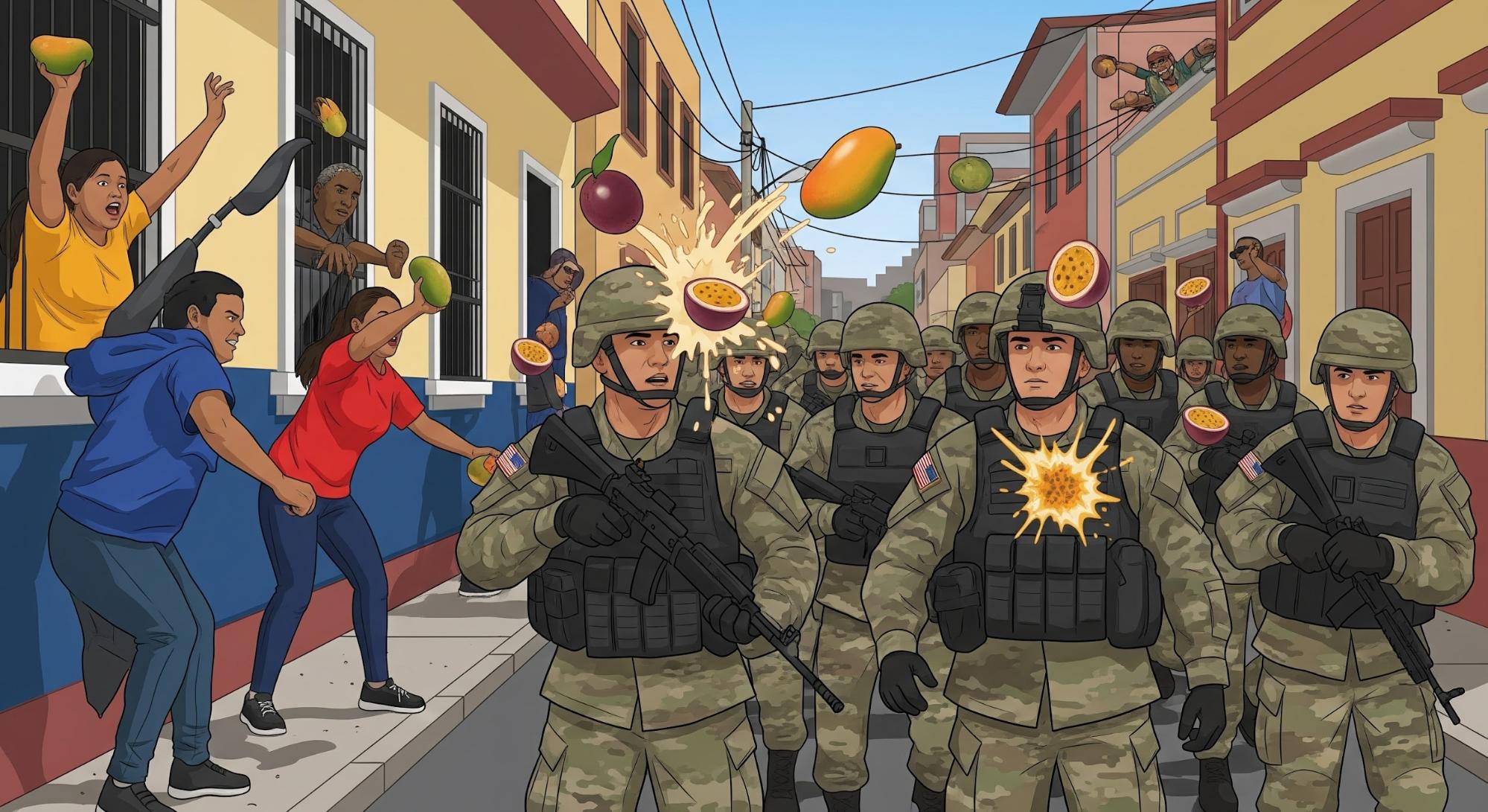
¡Seremos Bienvenidos Como Libertadores!
Posted January 06, 2026
By Sean Ring