Posted June 11, 2026

By Matt Badiali
Feeding the Electron Beast
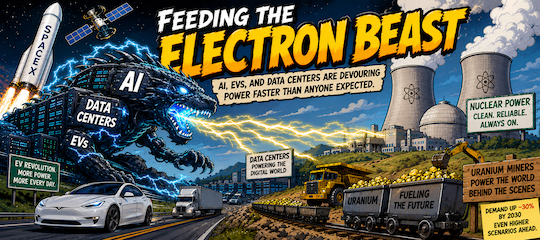
Data centers bring with them a massive demand for power. We need every electron we can produce. That’s driving a renaissance in electric power in general, and in nuclear power specifically.
Take a specific example from my home state of Pennsylvania.
Located in Harrisburg, the Three Mile Island nuclear station is the poster child of this new surge. Giant power company Constellation Energy plans to restart Three Mile Island Unit 1 (rebranded the Crane Clean Energy Center).
Constellation got a huge $1.0 billion loan from the Department of Energy to renovate the site. And Microsoft signed a 20-year power purchase agreement. That gives the software giant 100% of the power generated by the 835-megawatt facility for its data centers in the region.
However, PJM, a private, non-profit Regional Transmission Organization that manages the region's electricity market, threw up a roadblock. The group found that the grid required two major upgrades to add the new power safely. The problem is that those projects will take until 2030 at the soonest, even though Crane could begin adding power by 2027.
That’s where the U.S. government intervened, in the form of the Federal Energy Regulatory Commission (FERC). They overruled PJM and allowed Constellation to begin putting power into the grid as soon as Crane is ready.
A FERC spokesperson said:
“The requested waiver will allow for the transfer of CIRs between the Eddystone units and Crane, which may reduce or eliminate the number of Contingent Facilities for Crane and thereby potentially increase Crane’s interim deliverability and enable Crane to be fully operational before December 31, 2030.”
This is only the second ever restart of a nuclear power plant in the U.S., and it’s likely to be the start of a trend in nuclear energy for the U.S. Here are some of the benefits:
- An independent study concluded that the plant would add over $16 billion to Pennsylvania's gross domestic product.
- The restart will support around 3,400 direct and indirect jobs and provide upwards of $3.6 billion in combined state and federal tax revenue.
- The Platts Global Energy Awards recognized the Crane project for its innovative approach to regional power and economic revitalization.
Nuclear power is a critical part of the future of energy. Not just in the U.S., but around the world. This is a huge change. Nuclear power has stagnated since the Fukushima Daiichi disaster in 2012. That’s over a decade of flat or negative growth.
That killed uranium prices, as you can see from the graph below:
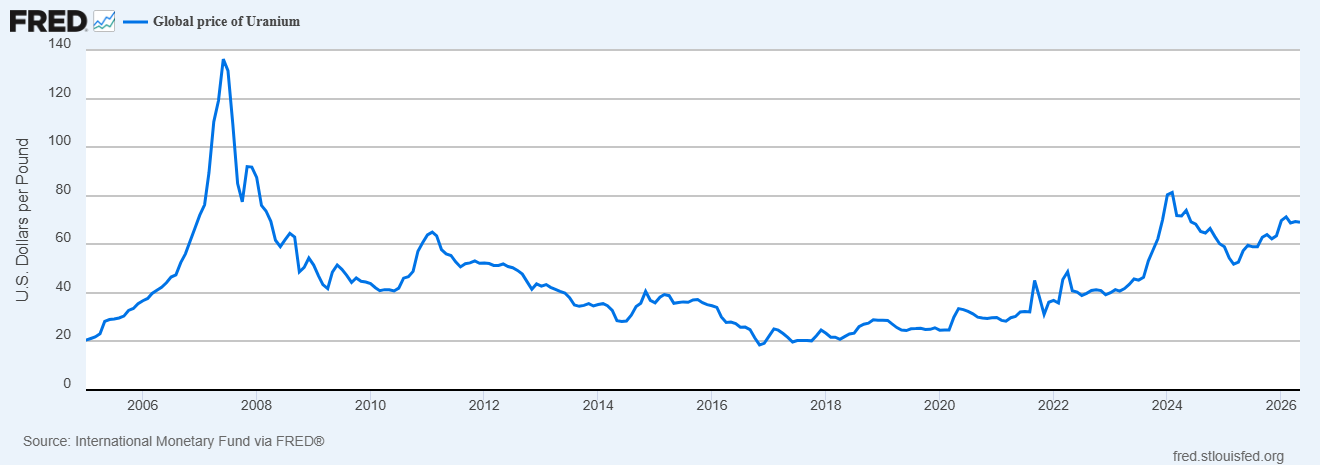
The sector went into a deep recession. Prices fell from a peak of over $130 per pound in 2007 to a low of less than $20 per pound in 2017. That’s an 85% decline. It forced the major mining company Cameco to massively reduce its production. And it devastated investment.
However, that changed in a huge way in the last year or so.
The world wants electricity, and they want it now. Over the past decade, we saw an explosion of battery-powered “stuff,” electric vehicles, and new data centers. Combine that need with advancements in nuclear power plants, and you get the current bull market in nuclear power.
International Energy Agency analysts now forecast nuclear power to grow by 33% through 2035. According to the Agency:
"A record high in nuclear power output is expected in 2025. Technology advances - particularly in small modular reactors are improving the outlook for nuclear power. As demand surges and the need for reliable, low-emissions baseload electricity increases, nuclear is increasingly seen as a critical part of a secure, affordable and diverse electricity mix."
As you know, you can’t make electricity without fuel. That’s where we want to focus our investments. That’s because demand growth is soaring. Most analysts expect a 30% increase in uranium demand by 2030.
The chart below shows global uranium demand and its forecast. However, high-case forecasts indicate nuclear power growth of 50% through 2040. And that would drive annual demand potentially as high as ~156,500 tons.
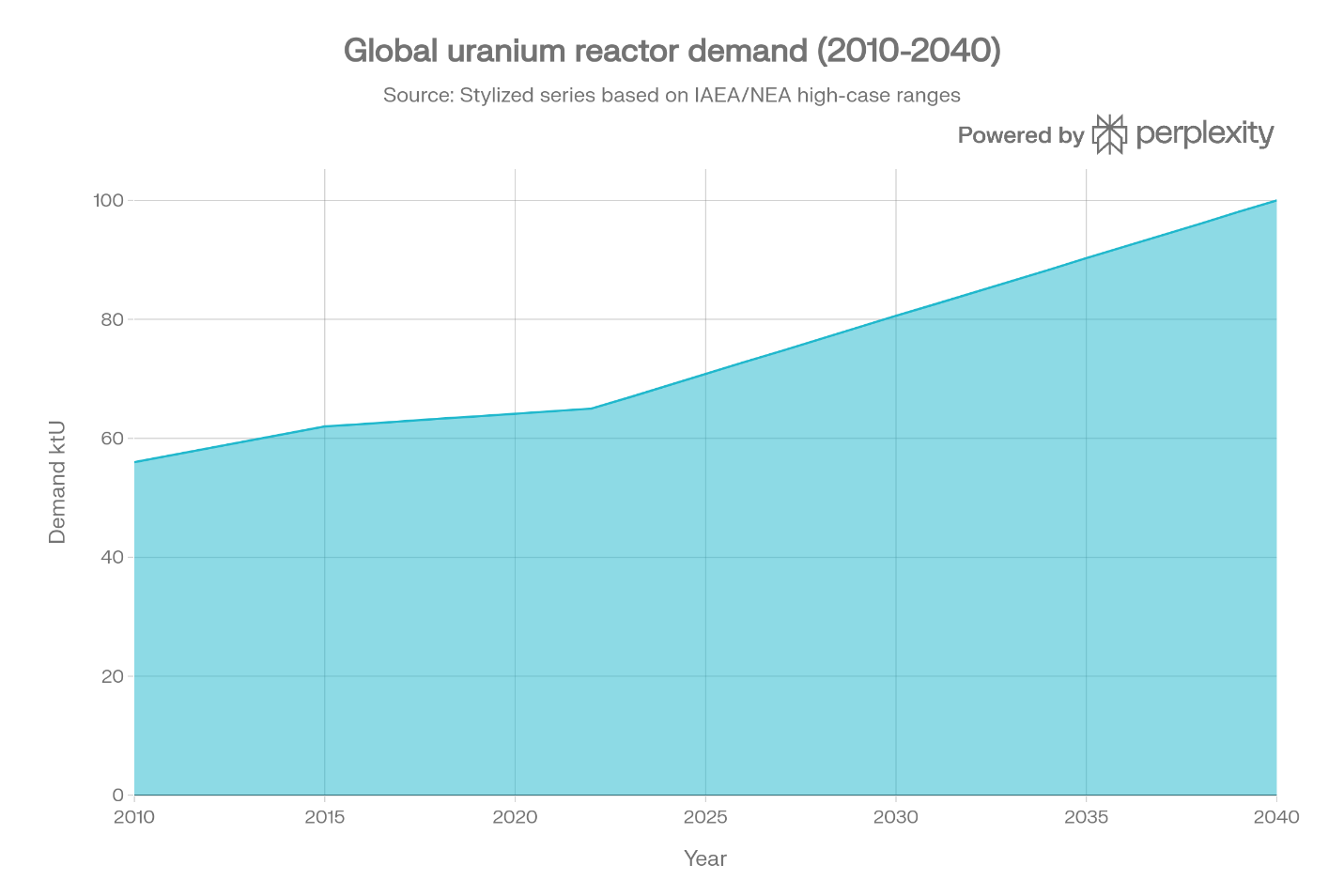
The demand picture is clear – we need a lot more uranium. Invest accordingly.
The Rivets Behind the Rocket
Posted June 10, 2026
By James Altucher

One Small Float for Man
Posted June 09, 2026
By Byron King
The Philly Hangover
Posted June 08, 2026
By Sean Ring

The Philadelphia Stories
Posted June 05, 2026
By Sean Ring

Charlie’s Operating System
Posted June 04, 2026
By Sean Ring
